FLORENCE, WITH A FORK IN HAND
A Love Affair with Renaissance Beauty, Tuscan Flavors, Handmade Leather & the Art of Living Well
By Yvette | Yvette’s Gourmet Kitchen
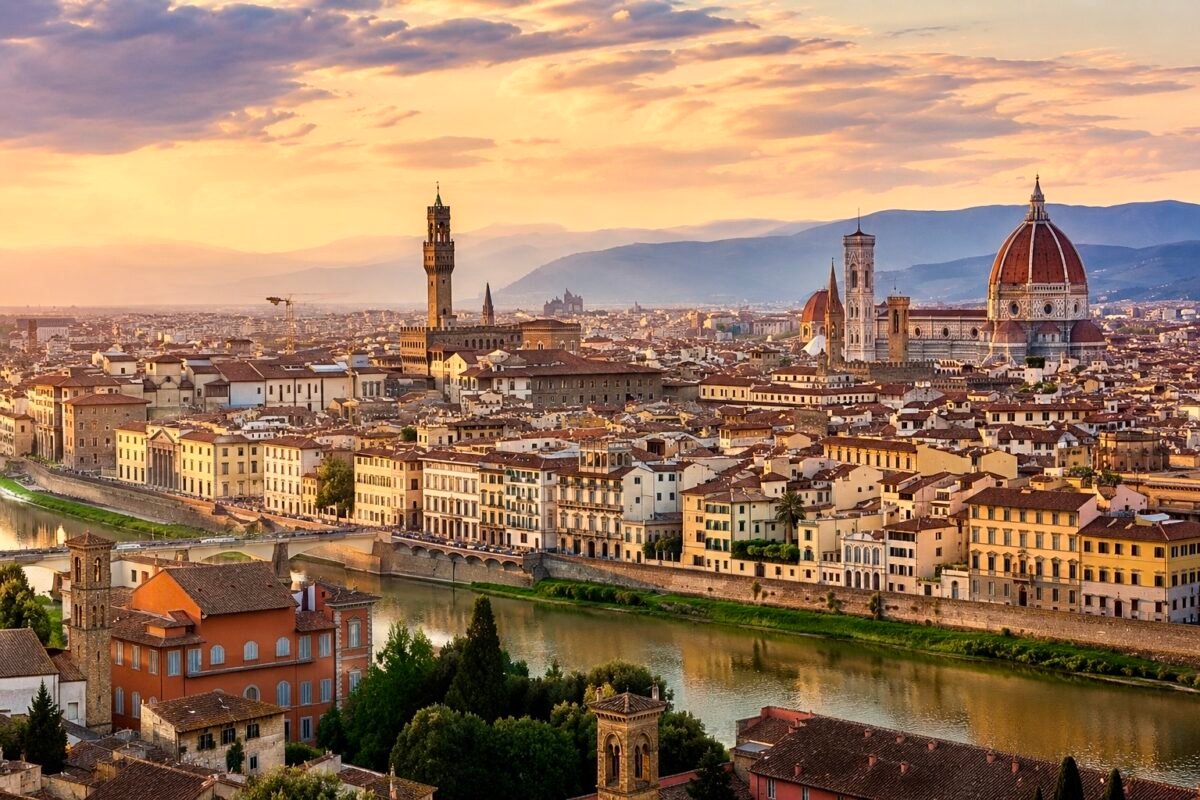
There are cities you visit with a camera in your hand, and then there are cities you visit with a fork. Florence, for me, was both. I arrived ready to admire Brunelleschi’s magnificent dome, wander through centuries-old churches and lose myself among honey-colored buildings and cobblestoned streets. What I didn’t anticipate was how thoroughly Florence would make its way into every sense—through the aroma of espresso drifting from a café, the silky tangle of pasta beneath a Tuscan ragù, the sweetness of freshly made gelato, the buttery scent of hand-finished leather and, naturally, a glass of wine appearing through a tiny opening in an ancient wall.
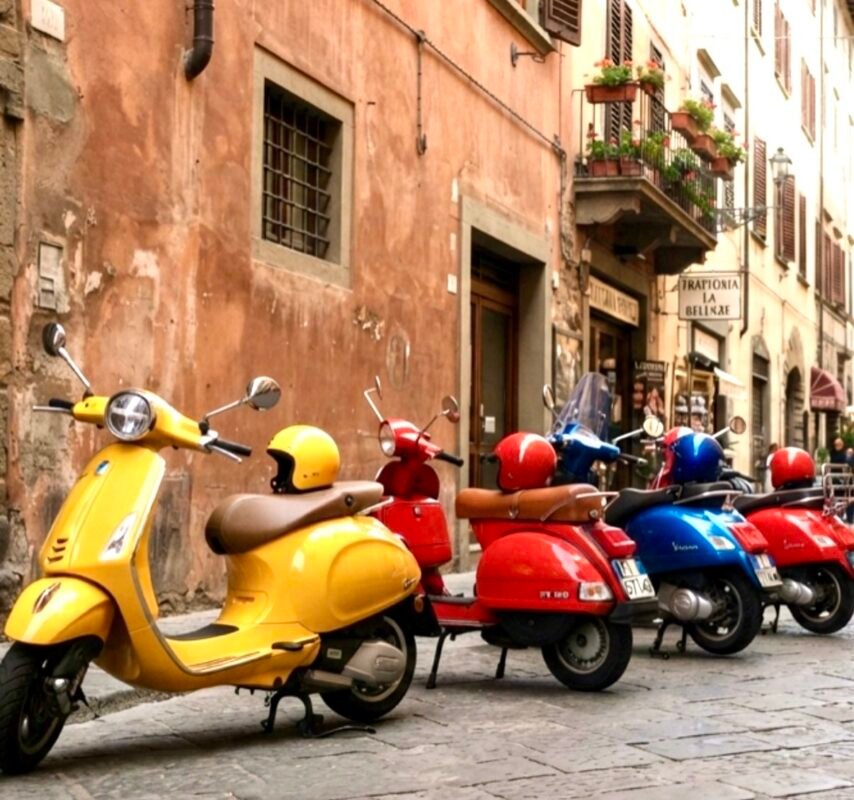
Florence is a city where architecture is not merely something to admire; it is the backdrop to everyday life. Renaissance palaces become restaurants, medieval lanes lead to elegant piazzas, ancient churches stand beside fashionable boutiques, and centuries-old stone walls seem perfectly comfortable sharing the street with a modern Vespa. Here, beauty isn’t tucked away behind velvet ropes. It is simply where you happen to be having lunch.
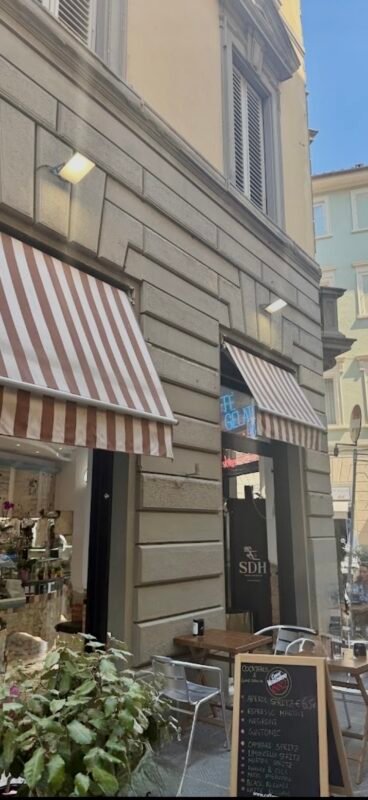
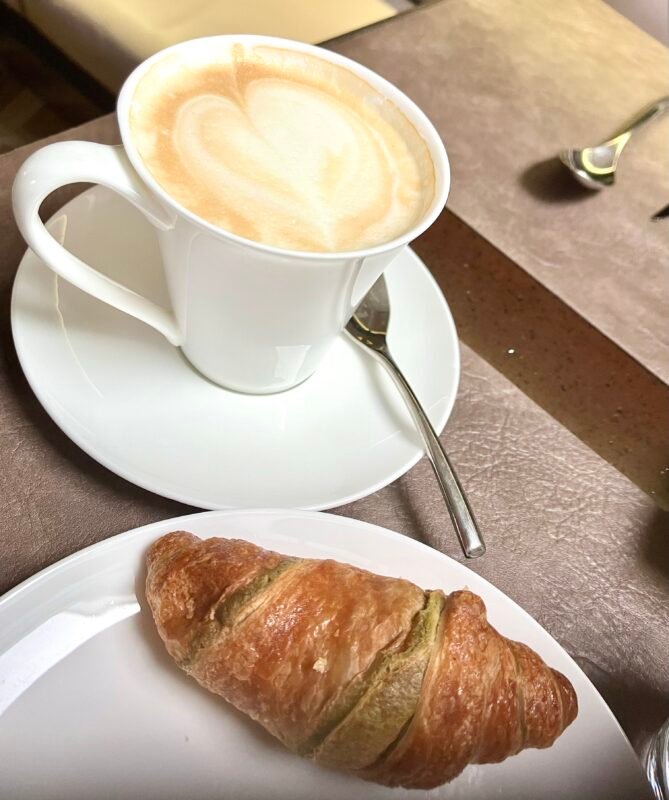
Stepping off the train at Florence’s bustling Santa Maria Novella station, the excitement of Florence seemed to begin before I had even reached the city streets. Just a few steps away, I stopped at Caffè Vergnano 1882 for that essential Italian welcome—a velvety cappuccino and a perfectly buttery croissant, enjoyed amid the lively rhythm of travelers coming and going. With a little caffeine-fueled happiness in hand, I was ready to collect my bags and make my way to Hotel Spadai, eager to settle in and begin my Florentine adventure.
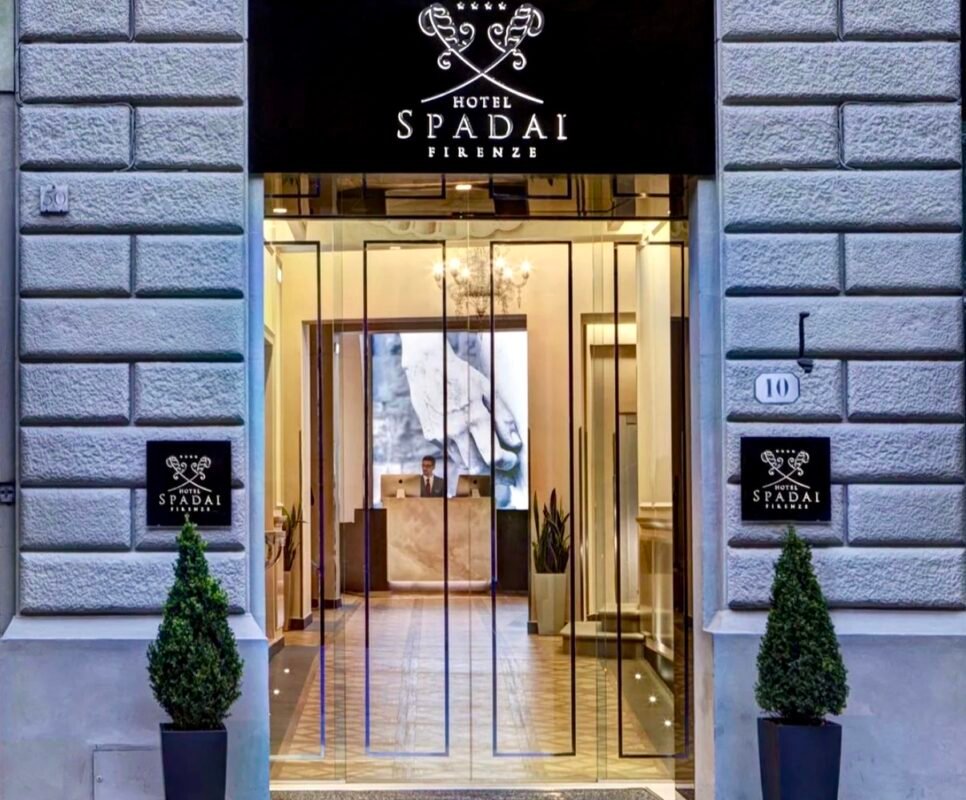
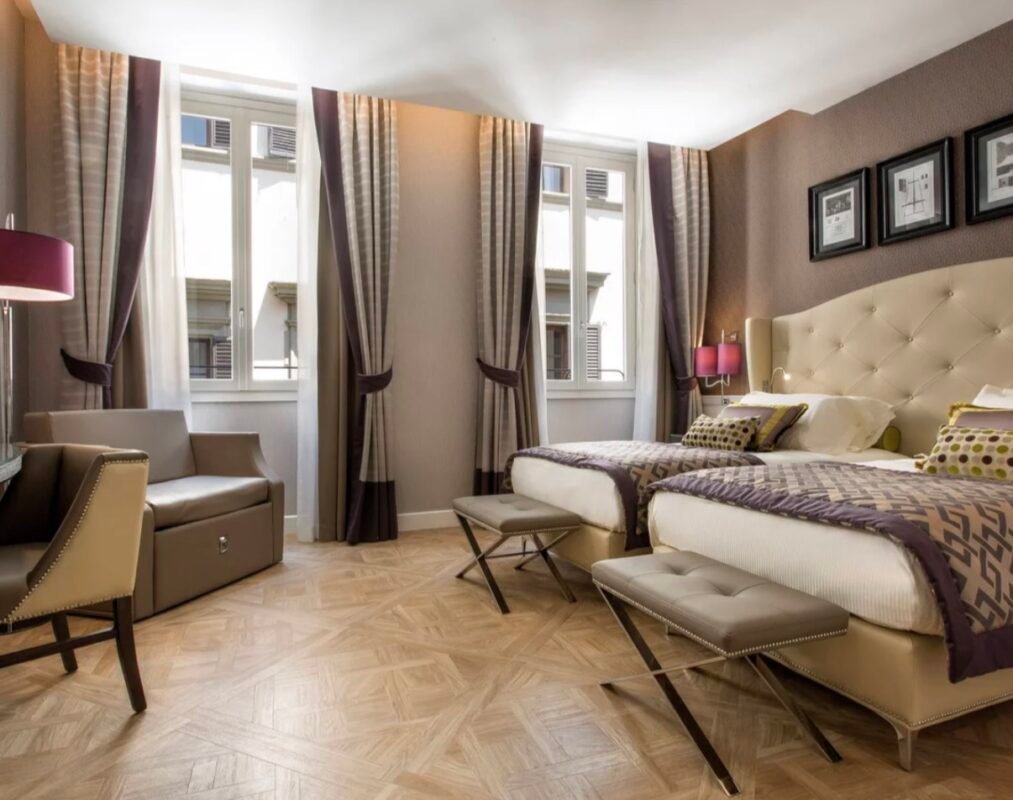
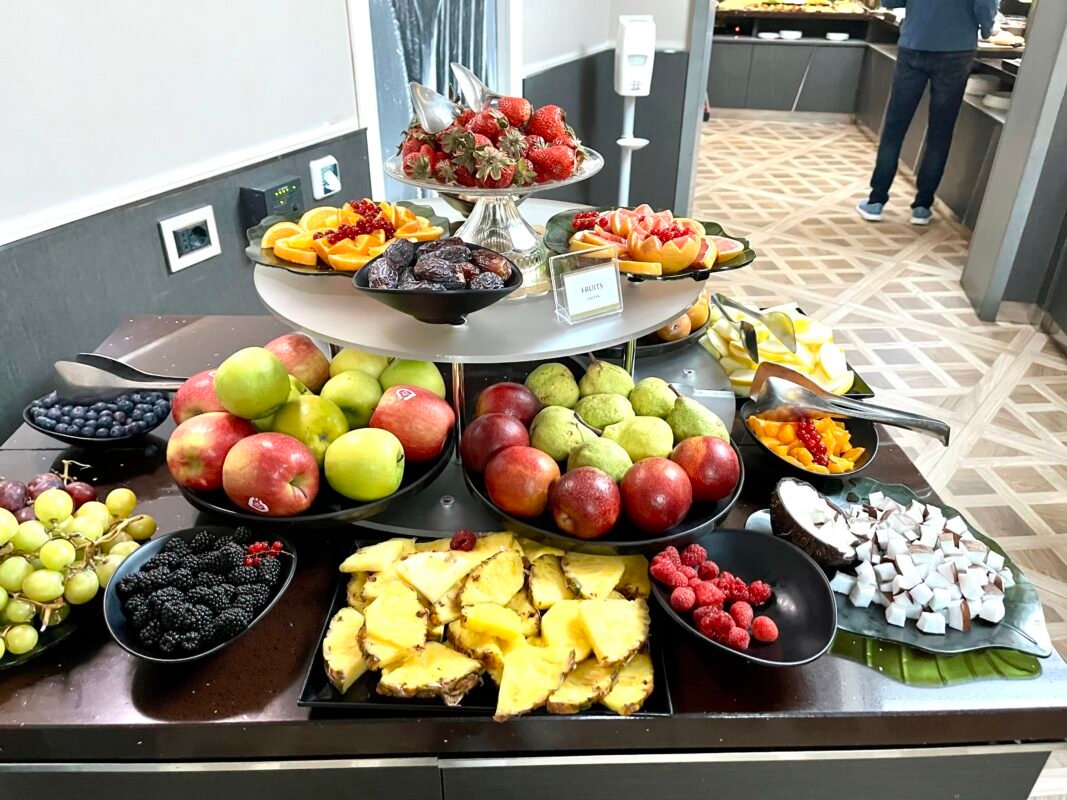
HOTEL SPADAI: SLEEPING BENEATH THE RENAISSANCE SKYLINE
My Florentine story began at Hotel Spadai, Via dei Martelli 10, Duomo, 50129 Florence, Italy,
an elegant boutique hotel in the historic center, where the Duomo is practically your neighbor. Stepping outside in the morning and seeing Brunelleschi’s dome rising above the rooftops is one of those travel moments that never quite becomes ordinary.
The hotel combines contemporary comfort with the character of its historic surroundings, offering beautifully appointed rooms, breakfast, a welcoming lounge bar and a private spa experience. Its location makes it an ideal base for exploring Florence on foot. And walking is precisely how Florence wants to be discovered.
From Hotel Spadai, the city unfolds almost theatrically. Turn one corner, and there is the Duomo; continue down another street and a Renaissance palazzo appears. Narrow medieval passages suddenly open into sun-filled piazzas. It feels as though Florence has arranged its architecture as a series of beautifully timed reveals.
THE DUOMO: FLORENCE’S MAGNIFICENT CROWN
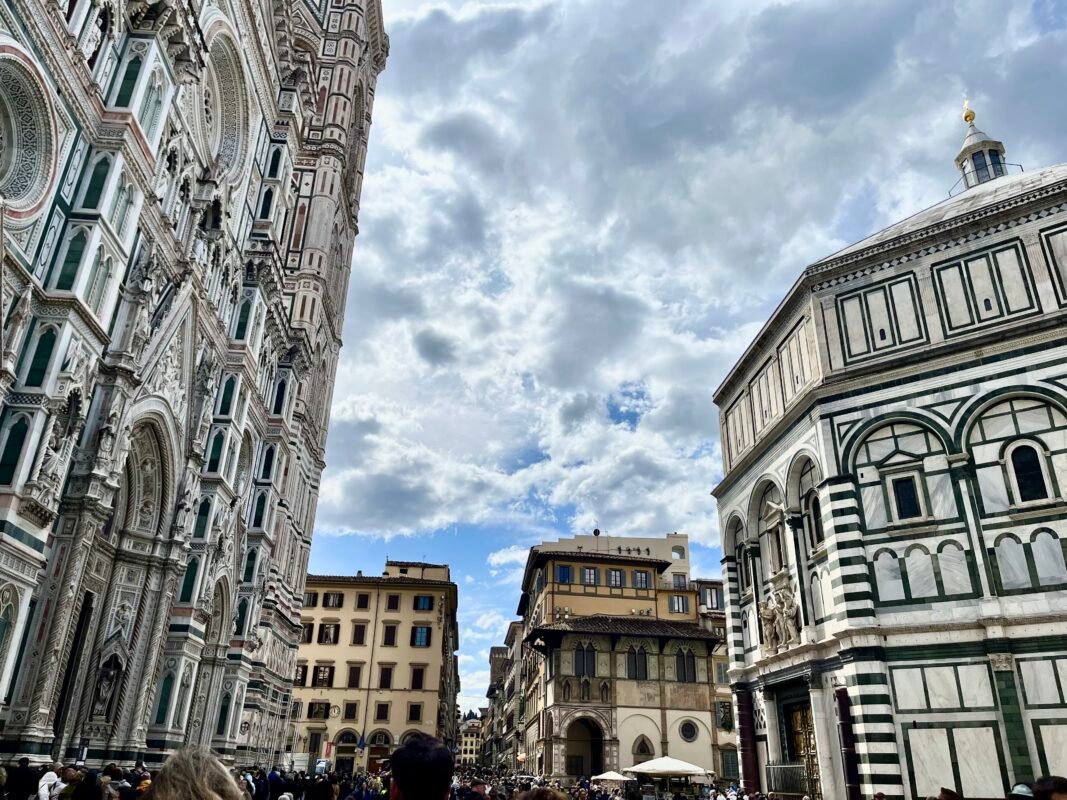
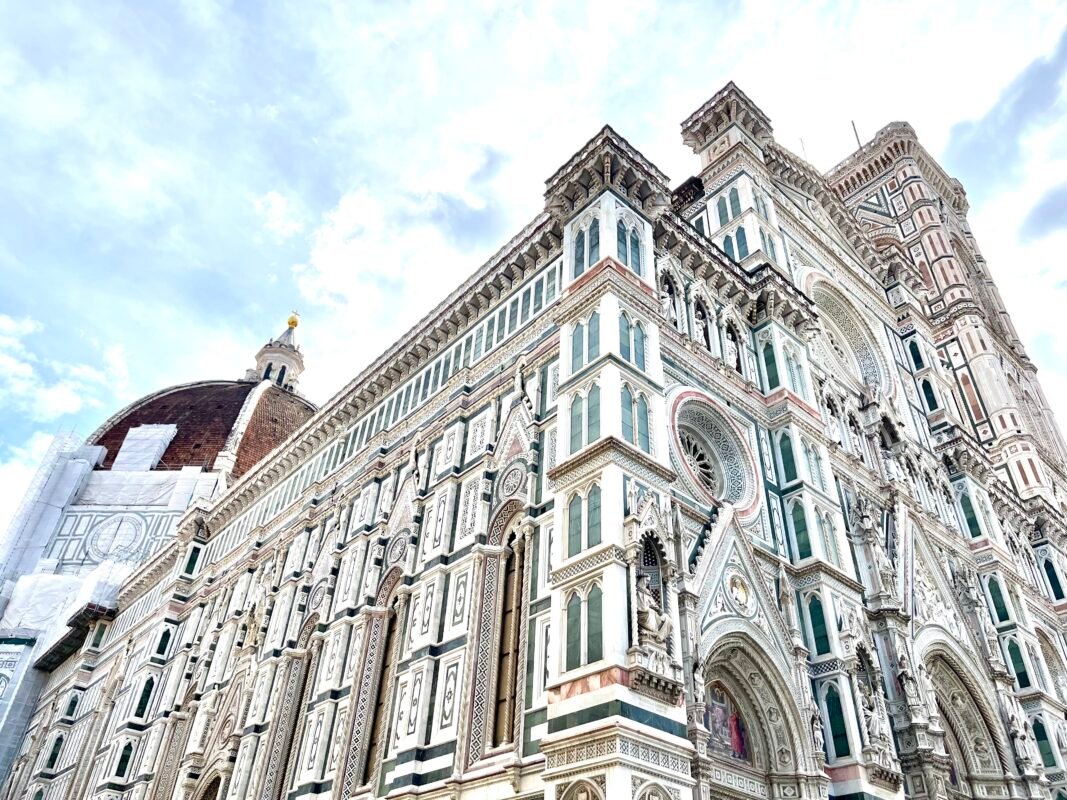
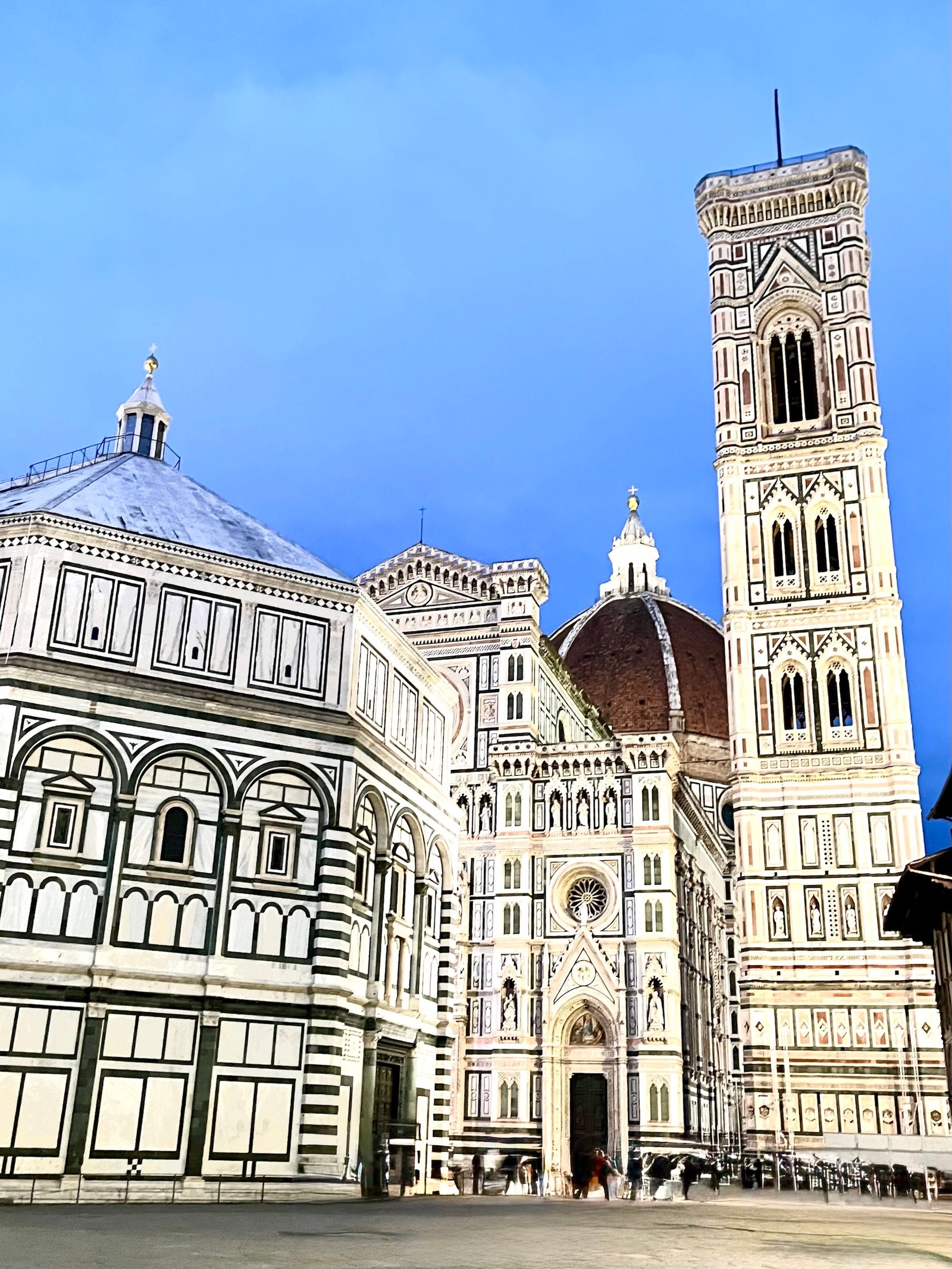
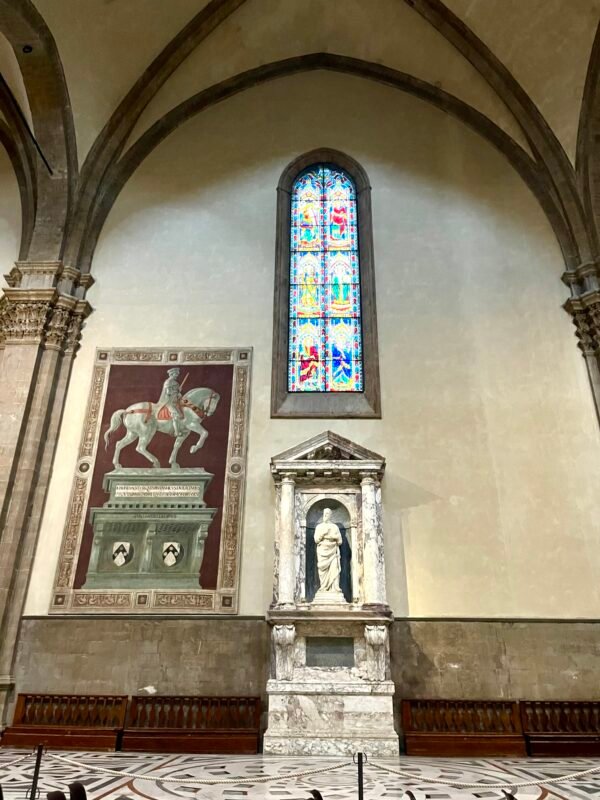
The first building that commands attention is, of course, Santa Maria del Fiore, Florence’s extraordinary cathedral, and one of the largest churches in the world.
The Duomo’s façade is a spectacular composition of white, green and pink marble, while Brunelleschi’s enormous terracotta-colored dome rises above it with astonishing confidence. Completed in the fifteenth century, the dome was a feat of engineering that challenged the architectural knowledge of its time.
Standing beneath it, I found myself thinking about the sheer audacity of Renaissance Florence. This was a city willing to attempt what others considered impossible.
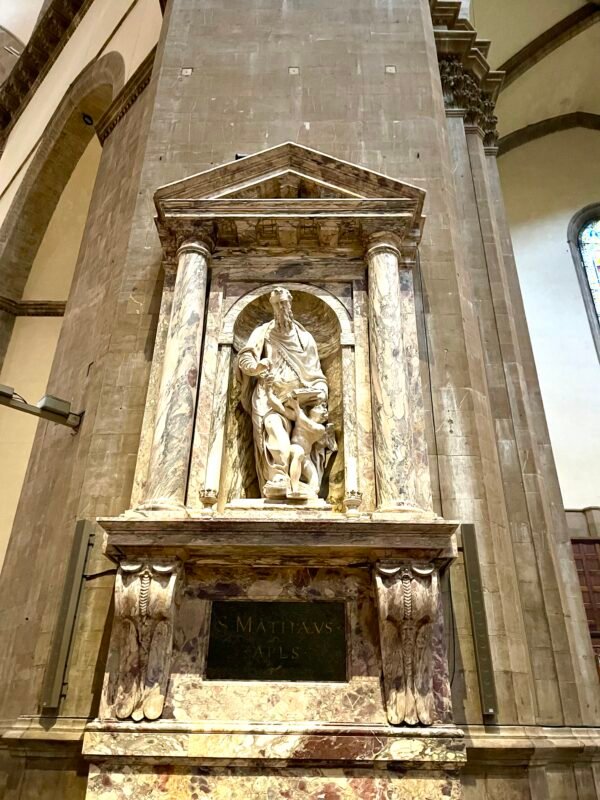
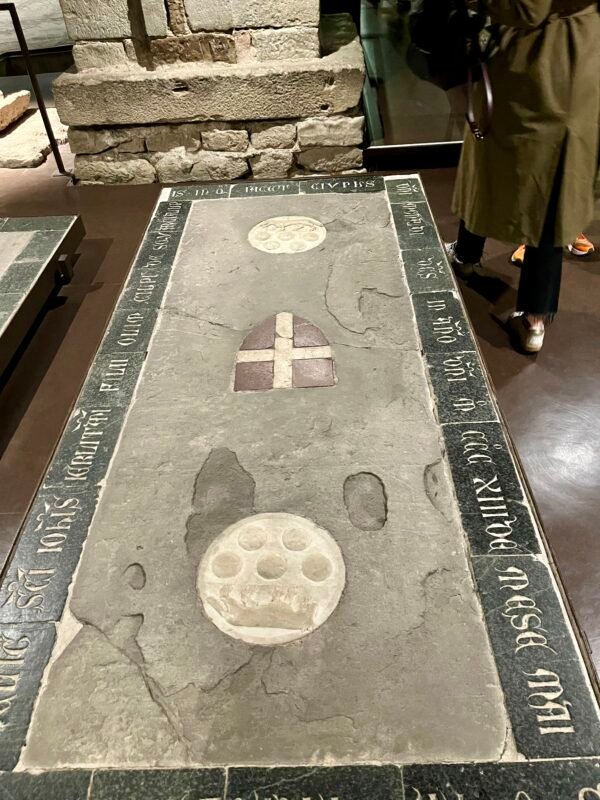
Beside the cathedral stands Giotto’s Campanile, the elegant bell tower rising more than 80 meters into the Florentine sky. Its intricate marble exterior echoes the cathedral, creating a harmonious architectural ensemble that is one of the most recognizable sights in Italy.
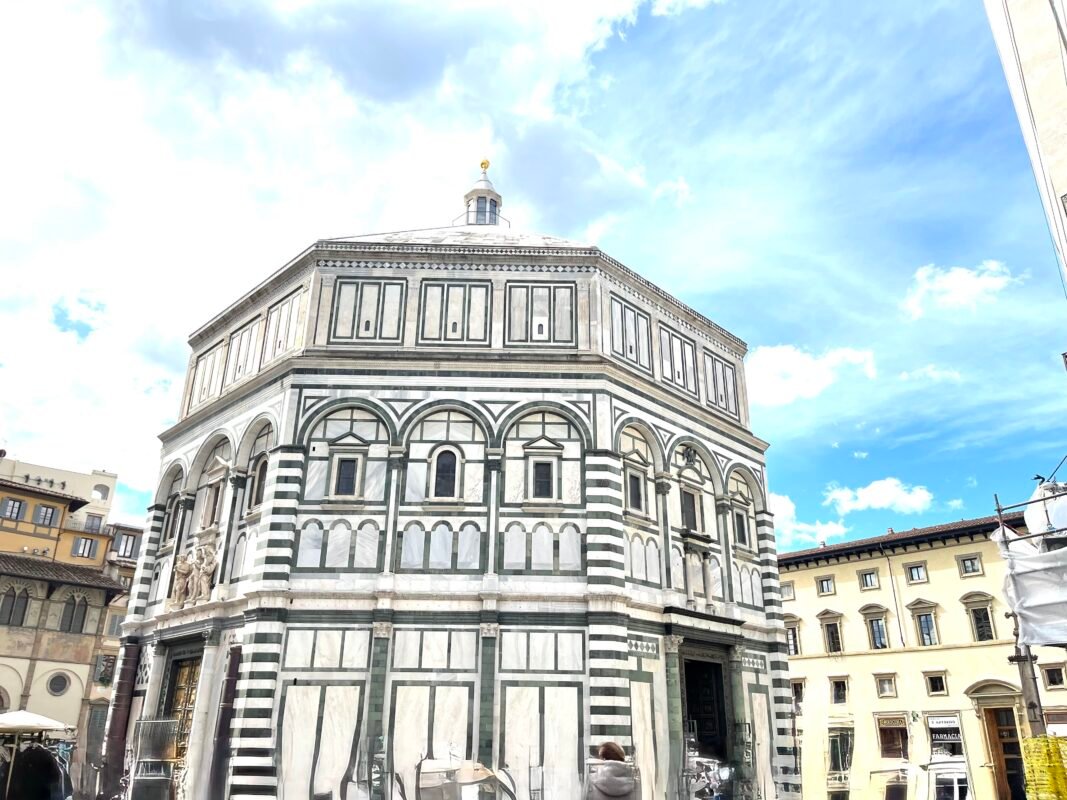
And then there is the Baptistery of San Giovanni, one of Florence’s oldest and most important religious buildings. Its octagonal form and marble exterior give it a quiet dignity beside the grandeur of the cathedral. The famous bronze doors—particularly Lorenzo Ghiberti’s celebrated Gates of Paradise—became landmarks of Renaissance art.
Together, the cathedral, bell tower and baptistery form one of Florence’s great architectural compositions.
And I hadn’t even had breakfast.
A CITY BUILT BY GENIUS
Florence began as the Roman settlement of Florentia in 59 B.C., but its most dazzling chapter came during the Renaissance. Wealth from banking, commerce and trade helped transform the city, while the Medici family became powerful patrons of art and architecture.
The result is a city that feels almost impossibly concentrated with genius.
Michelangelo.
Leonardo da Vinci.
Botticelli.
Donatello.
Brunelleschi.
Their names are everywhere, but what fascinated me most was that their world remains physically present. You are not simply looking at photographs of Renaissance Florence; you are walking through the streets that inspired it.
The Palazzo Medici Riccardi, commissioned by the Medici family, is a magnificent example of Renaissance architecture. Its austere stone exterior gives way to more elegant interior spaces, including the celebrated Magi Chapel. The building captures something essential about the Medici aesthetic: power presented with restraint.
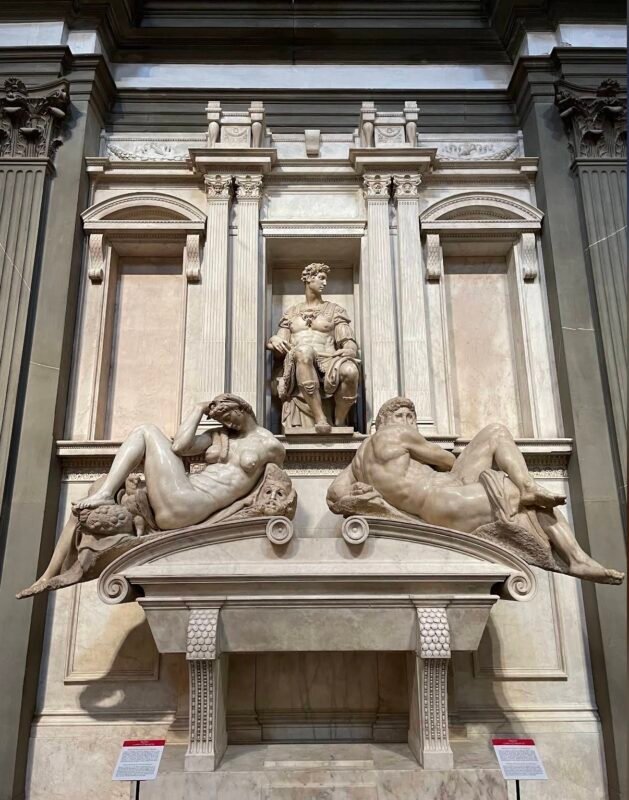
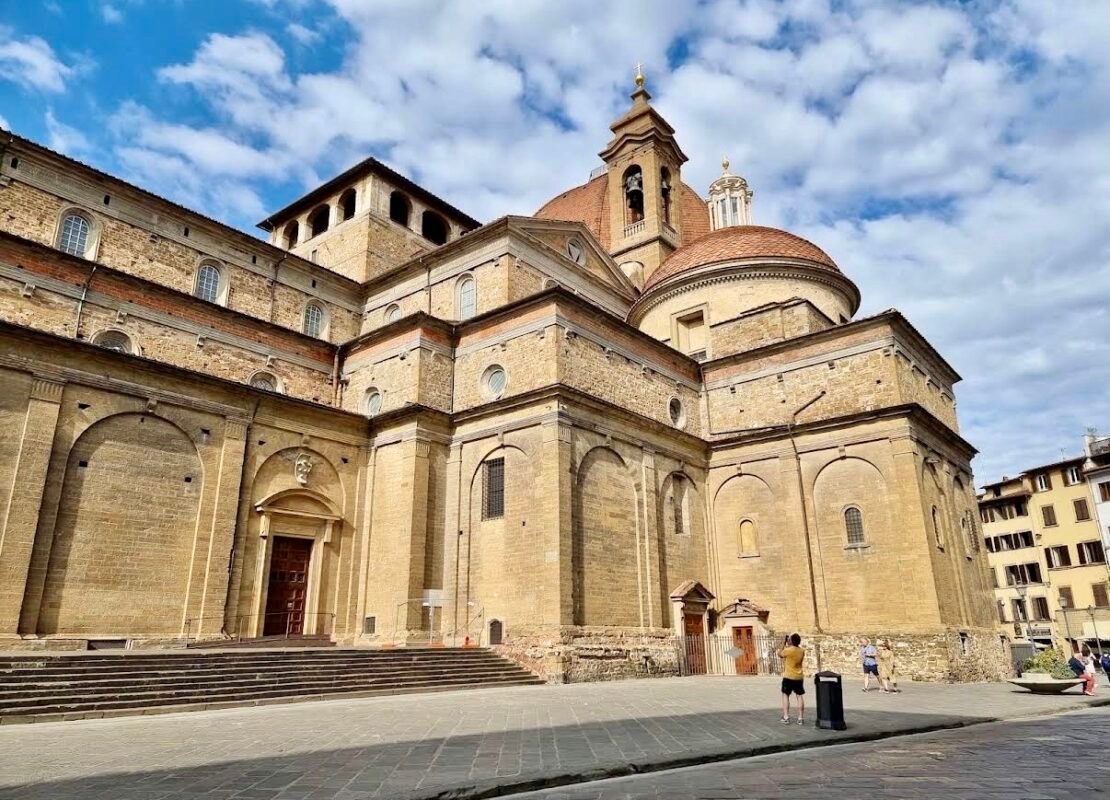
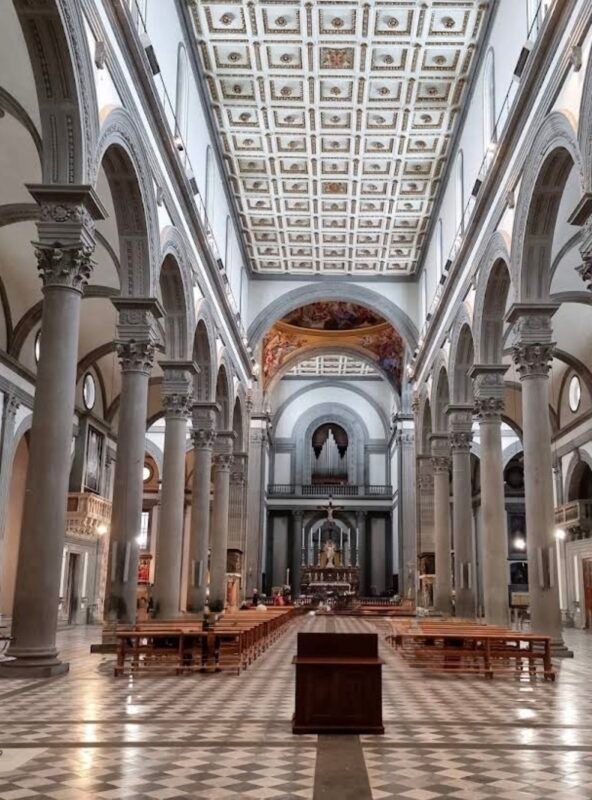
Nearby, Basilica di San Lorenzo reveals another chapter of Medici history. Its unfinished-looking exterior contrasts dramatically with the importance of the church and the grandeur within. The Medici Chapels, particularly Michelangelo’s New Sacristy, transform the building into a remarkable monument to the family that helped shape Florence.
This is one of Florence’s great architectural tricks: the outside may whisper while the inside sings.
SANTA MARIA NOVELLA: MARBLE AS ART
Another architectural treasure is Santa Maria Novella, whose extraordinary marble façade creates an almost graphic composition of geometric shapes and elegant proportions.
The church dates to the thirteenth century, while its famous façade was designed by Leon Battista Alberti in the fifteenth century. The harmonious relationship between its classical geometry and Gothic structure is quintessentially Renaissance.
I found myself admiring it the way I might admire a couture gown: the proportions, the details, the craftsmanship, the restraint.
Florence understands that elegance does not need to announce itself loudly.
SANTA CROCE AND THE ARTISAN SOUL OF FLORENCE
Then there is Basilica di Santa Croce, one of Florence’s most significant churches and a place deeply connected with the city’s artistic and intellectual heritage.
Its enormous interior contains the tombs and memorials of figures including Michelangelo, Galileo and Machiavelli. The church itself is a remarkable example of Franciscan Gothic architecture, with its vast nave and serene proportions.
Beautiful Piazza della Repubblica. Street musician playing Metalica’s “Nothing Else Matters.”
But Santa Croce is also connected to something very different: Florence’s leather-working tradition.
And that made my visit here particularly meaningful.
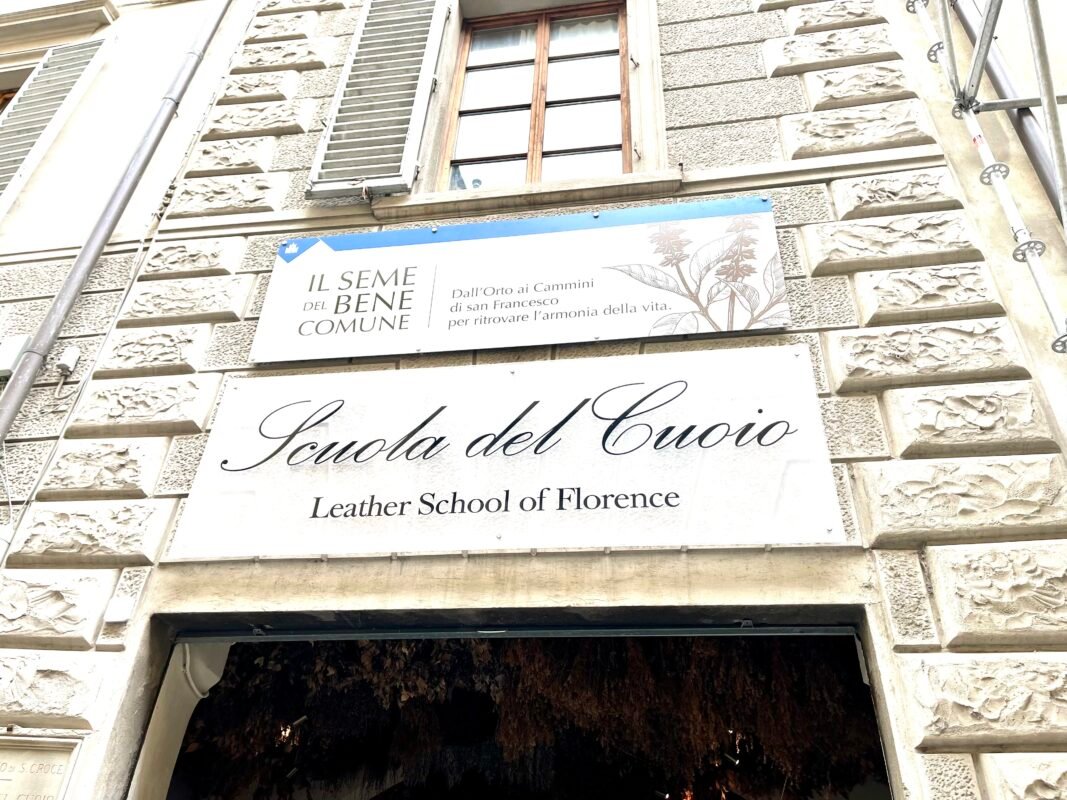
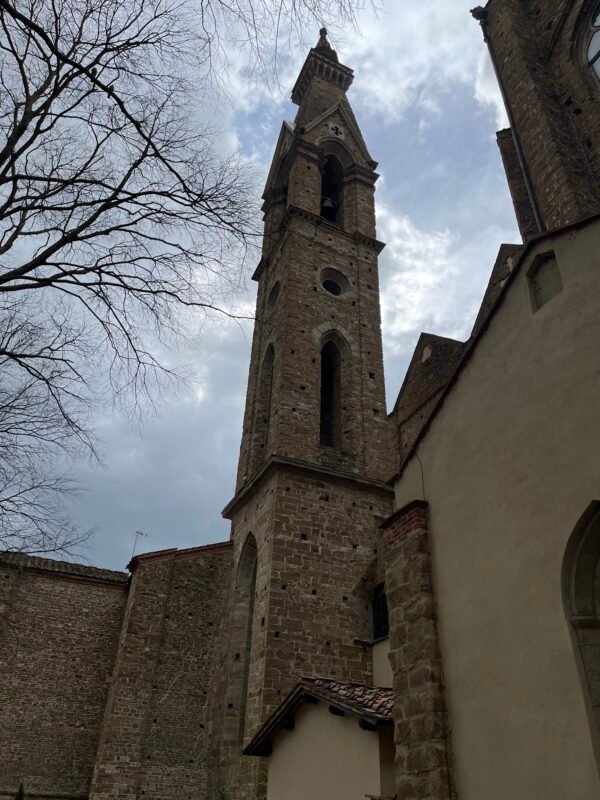
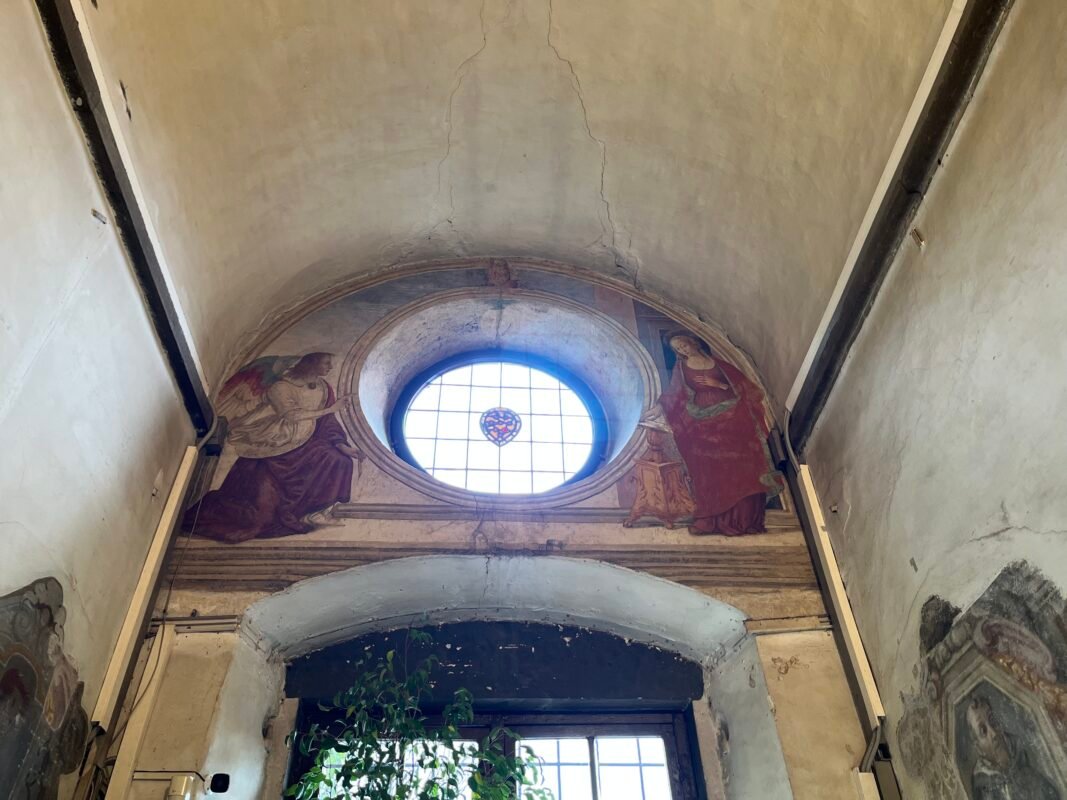
Not far from the church is the historic Scuola del Cuoio, the Leather School, where the ancient Florentine craft of leatherworking continues today.
Founded after World War II through a collaboration between Franciscan friars and Florentine leatherworking families, the school originally sought to give young people practical skills and opportunities for employment.
Today, artisans continue to create beautifully crafted leather goods by hand.
Handbags, briefcases, belts, wallets, and travel accessories.
Some pieces incorporate extraordinary decorative techniques, including 22-carat gold.
Standing among artisans working leather by hand, surrounded by historic architecture, I was reminded that Florence’s Renaissance spirit was never simply about paintings and sculptures.
It was about craftsmanship.
The city has always believed that an object made beautifully is a form of art.
PALAZZO VECCHIO: WHERE FLORENCE LOOKS LIKE A MOVIE
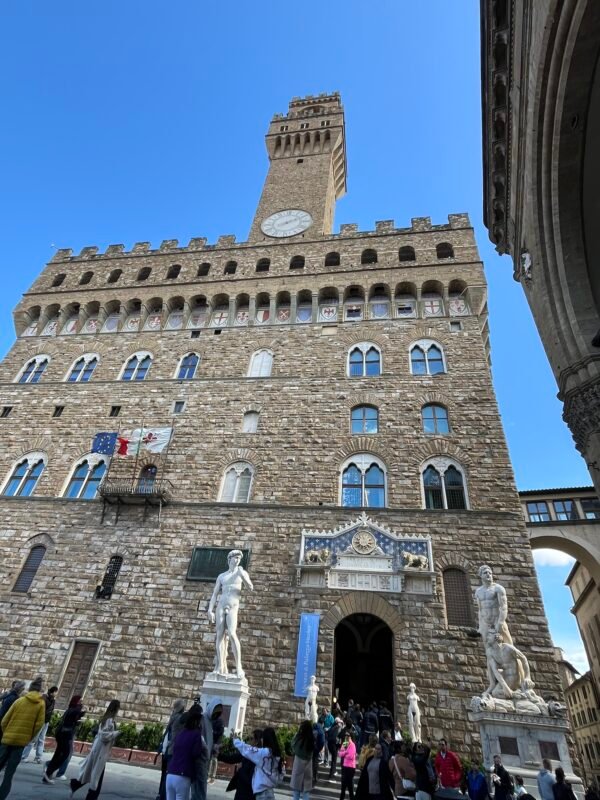
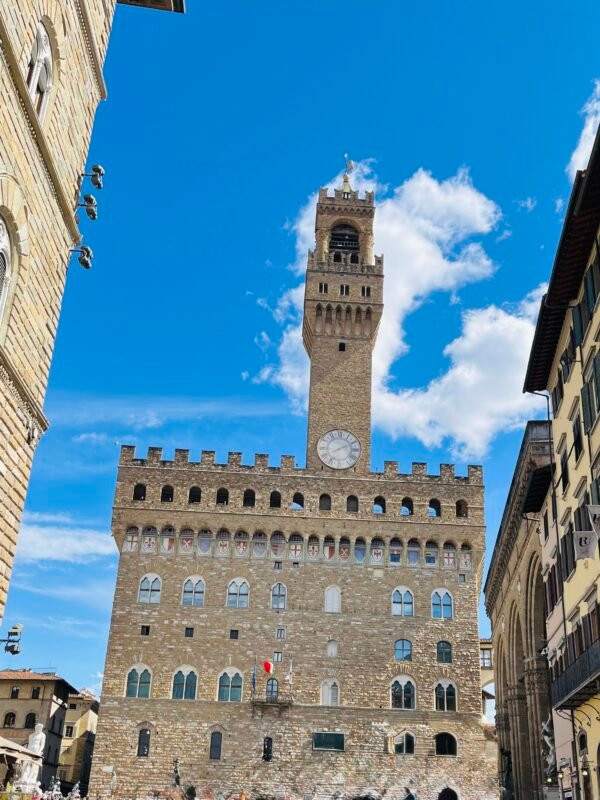
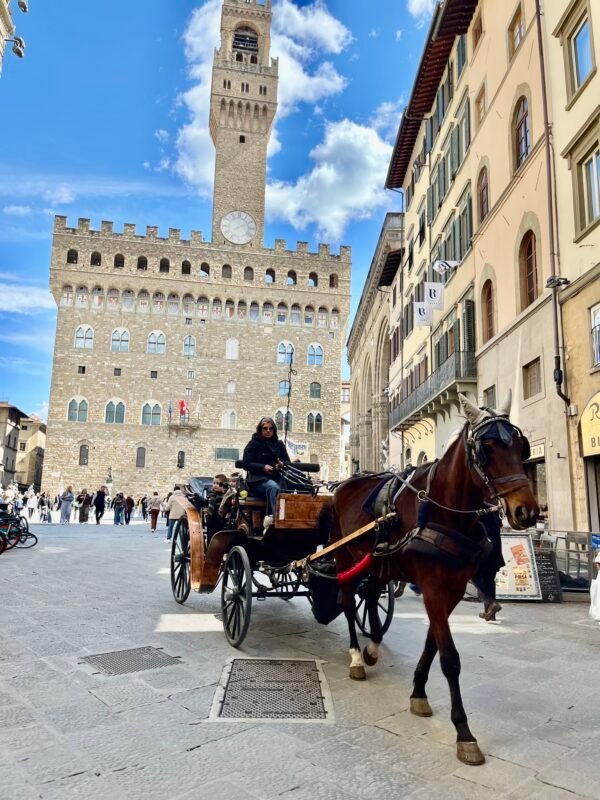
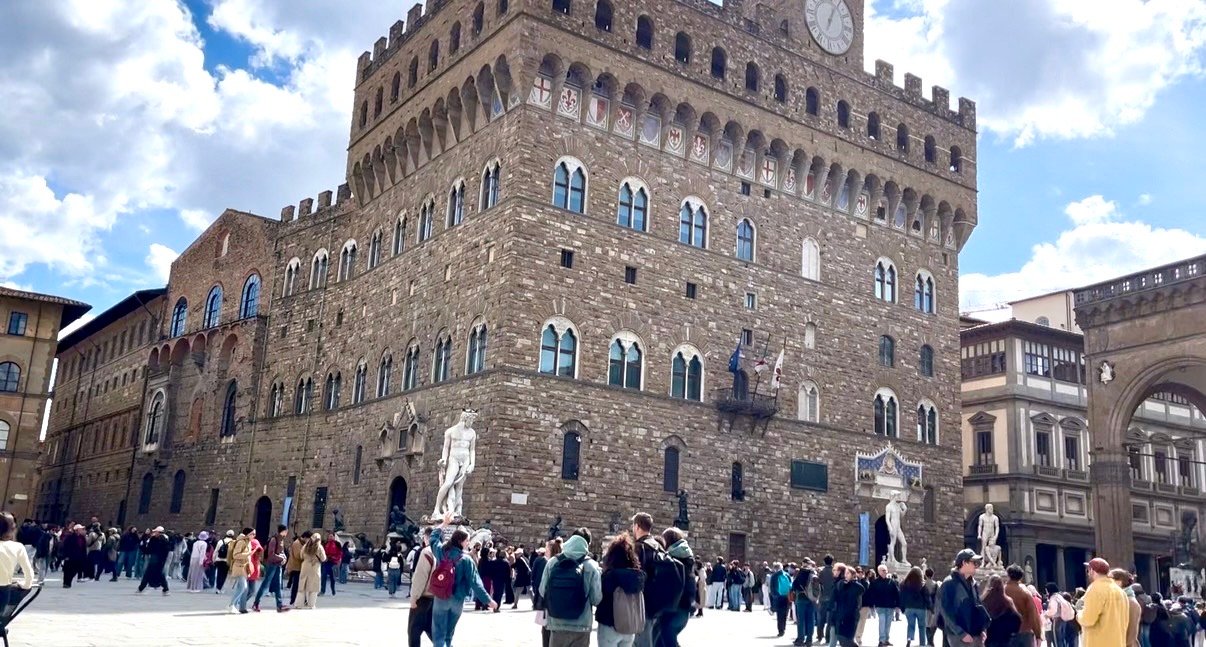
No architectural tour of Florence would be complete without Palazzo Vecchio, the imposing medieval fortress-palace dominating Piazza della Signoria.
Its crenellated tower and rugged stone façade give it a very different personality from the elegant Renaissance palazzi. It looks powerful, defensive, and slightly intimidating—as though it expects trouble.
The piazza surrounding it is essentially an outdoor museum.
Sculptures stand beneath the open sky, and the Loggia dei Lanzi provides a dramatic covered gallery filled with monumental works. The atmosphere is extraordinary: centuries of political power, sculpture and public life gathered in a single square.
Nearby stands the Uffizi Gallery, housed in a grand sixteenth-century building commissioned by Cosimo I de’ Medici and designed by Giorgio Vasari. Its long corridors and elegant façade frame one of the world’s greatest collections of Renaissance art.
And this is where Florence can become almost overwhelming.
There is simply so much beauty.
PONTE VECCHIO: A BRIDGE WITH A PERSONALITY
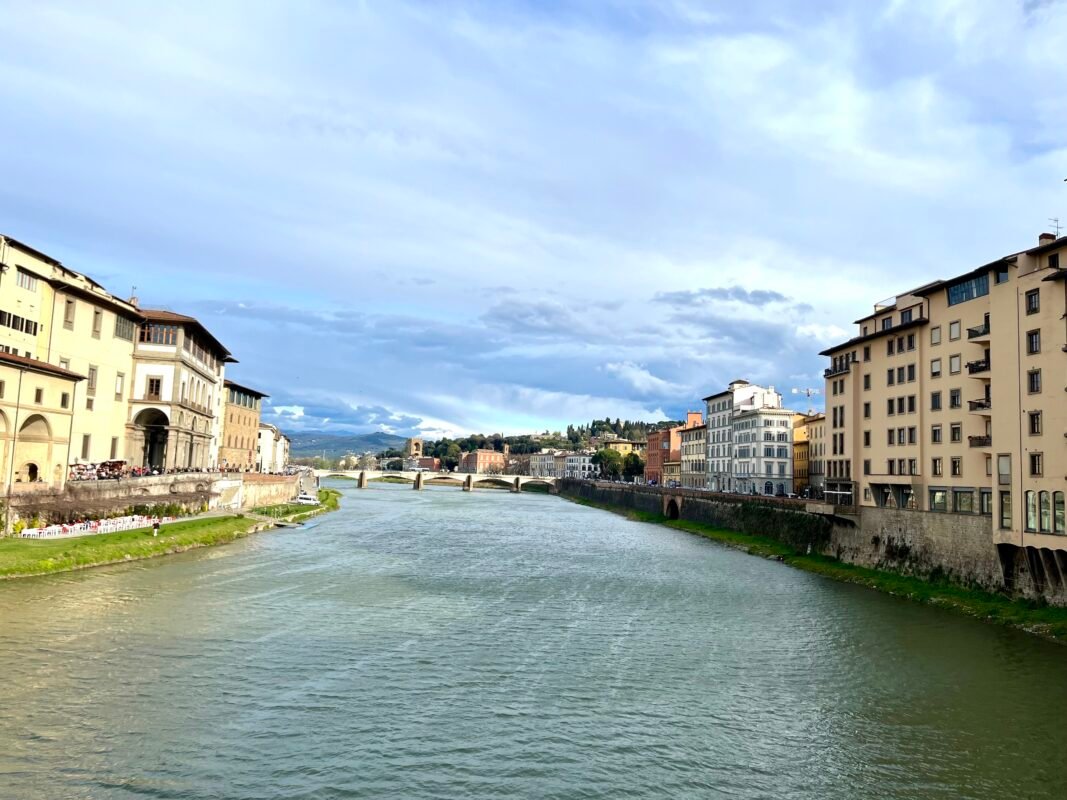
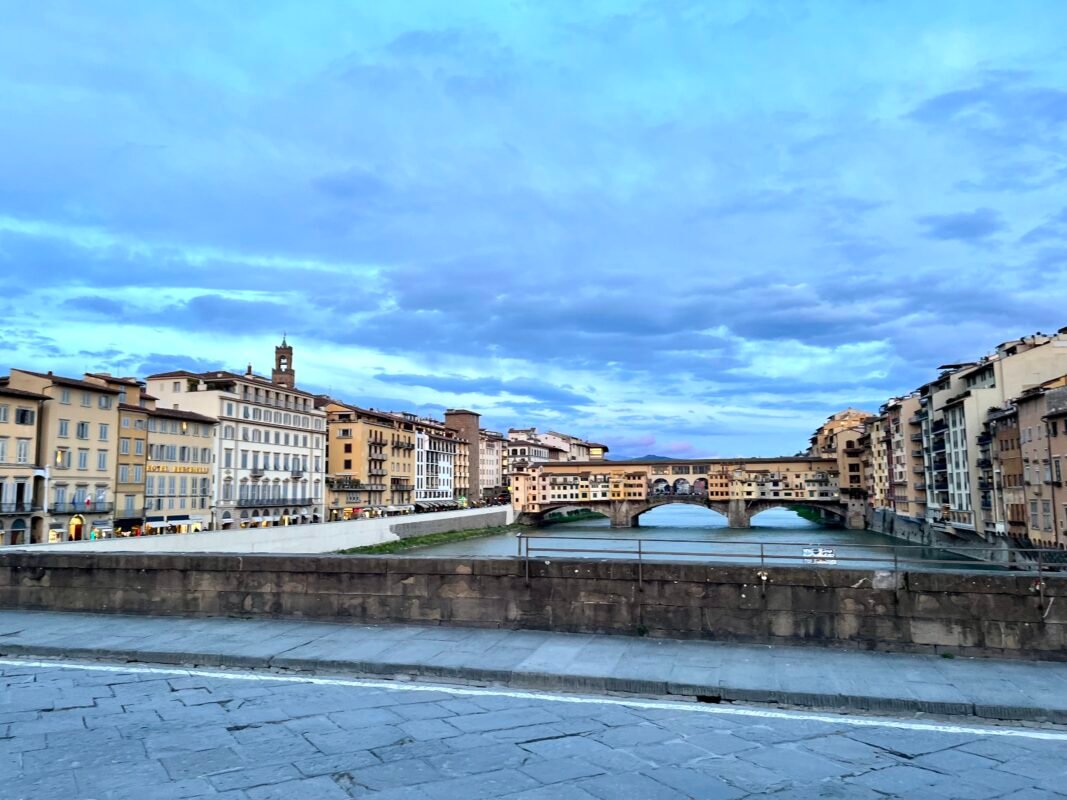
Then there is the Ponte Vecchio, perhaps Florence’s most charming piece of urban architecture.
Spanning the Arno River, the medieval bridge is famous for the small shops built along its length. Today, its jewelry stores shimmer in the afternoon light, but the bridge’s history reaches much further back.
Above it runs the Vasari Corridor, commissioned in the sixteenth century to provide the Medici family with a private passage between Palazzo Vecchio and Palazzo Pitti. Imagine having a private elevated walkway above the city simply because you happen to be one of the most powerful families in Renaissance Europe.
The Medici, apparently, did not believe in ordinary commutes.
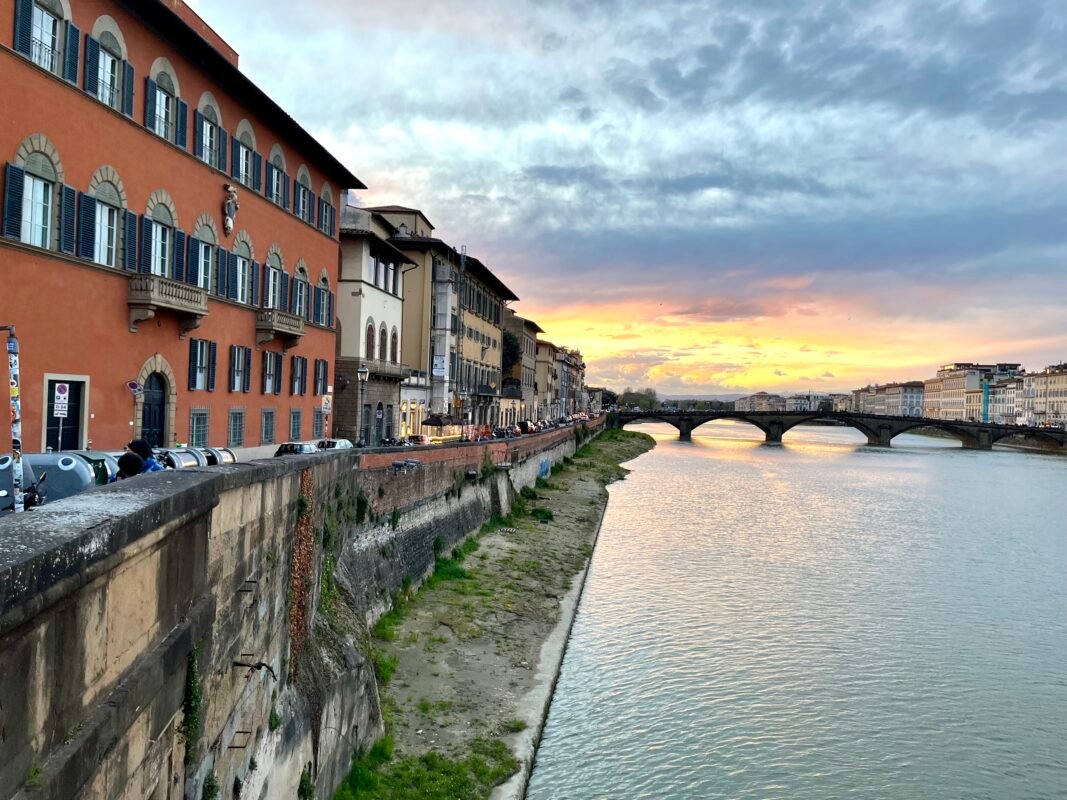
From the bridge, Florence opens in both directions—the Arno reflecting the buildings, the riverbanks lined with elegant façades, and the hills beyond forming a soft green frame around the city.
It is difficult not to stop and stare.
SASSO DI DANTE: HISTORY IN THE STREET
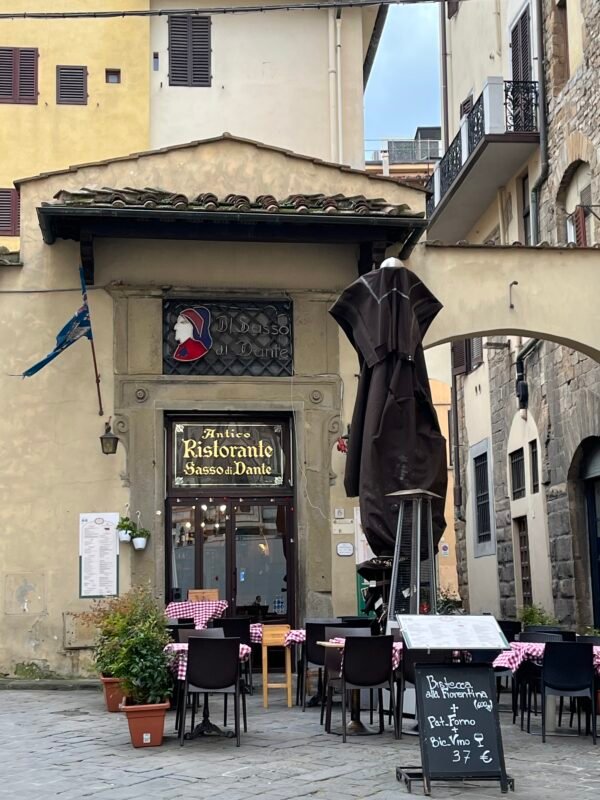
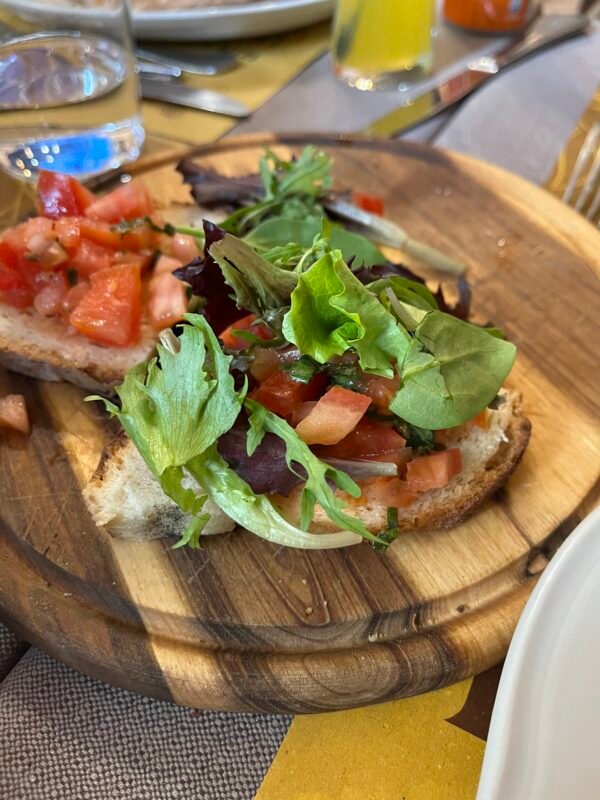
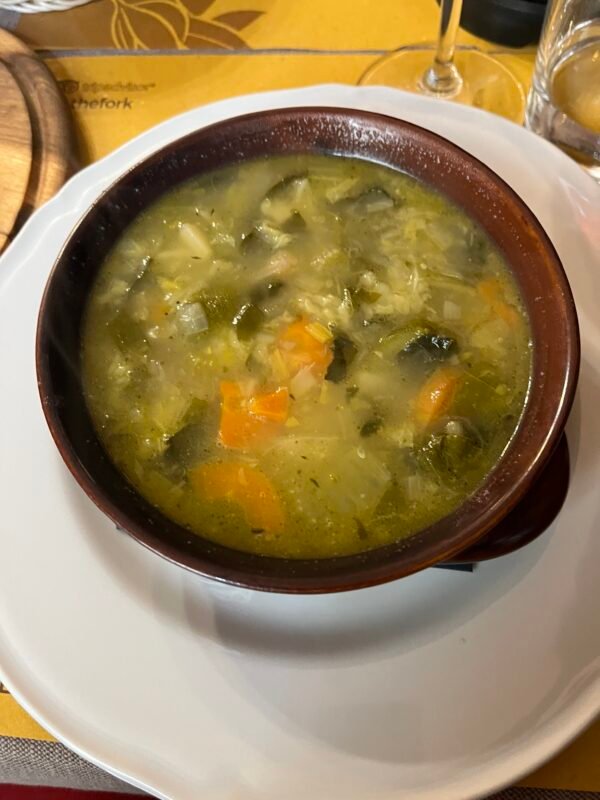
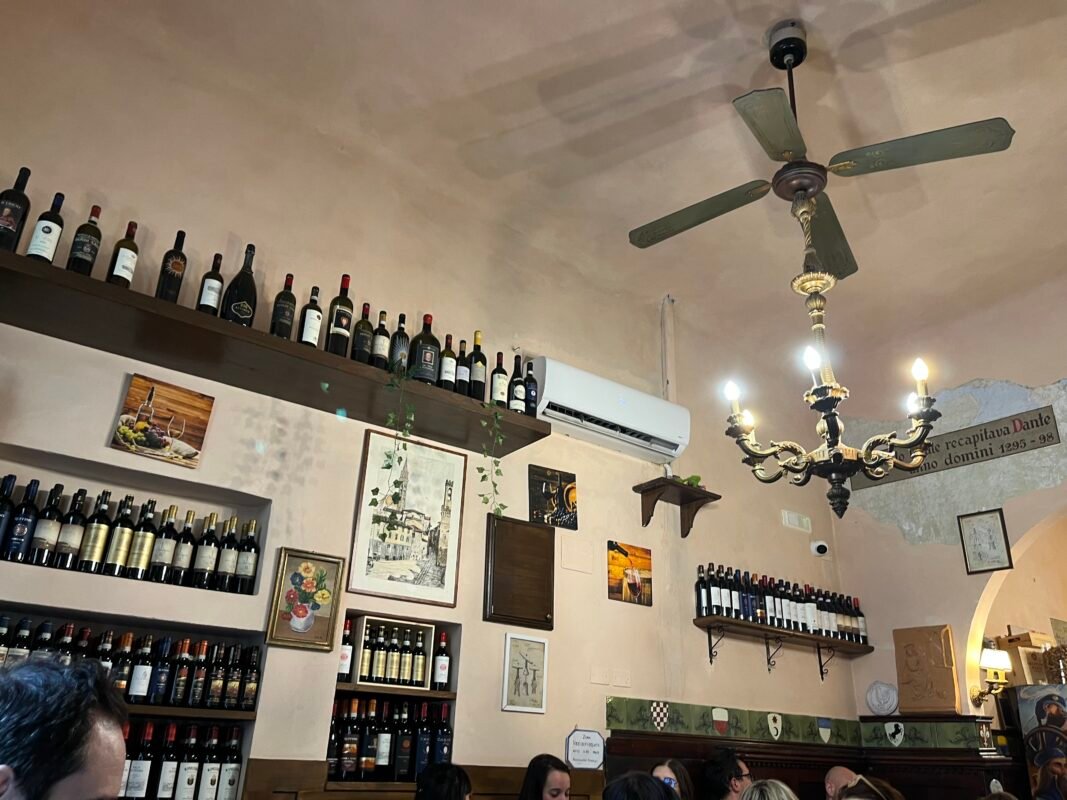
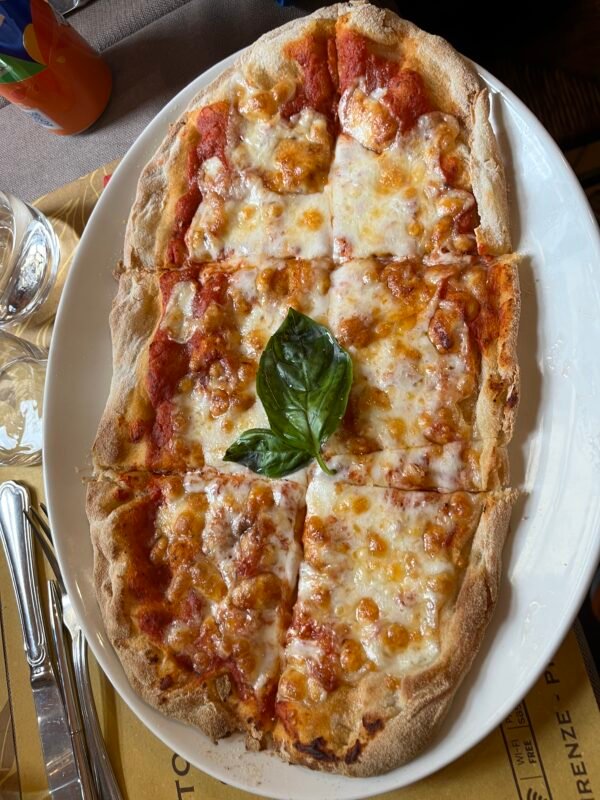
In Piazza delle Pallottole, I discovered Sasso di Dante, the stone associated by tradition with Dante Alighieri. Also, a gem of a restaurant tucked away, serving mouthwatering food. To start, I ordered their delicious bruschetta, a refreshing tomato-basil marriage served on crusty Tuscan bread. Then came the warm vegetable soup, so perfect on a rainy, cold day. And to finish my lunch, I ordered their flatbread pizza. Why not, I am in Italy, aren’t I?
It is a wonderfully modest historical landmark, especially compared with Florence’s enormous churches and palaces. But that is exactly why I loved it.
Florence doesn’t require every story to be monumental.
Sometimes history is simply a stone on a street corner, a local legend passed from generation to generation.
And after enough walking, there is only one appropriate response: Lunch.
WHEN TUSCANY ARRIVES ON A PLATE
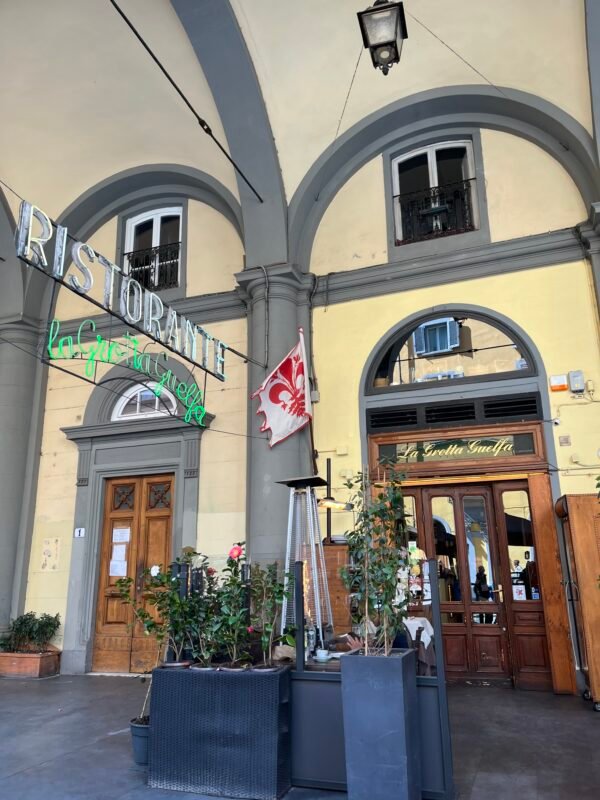
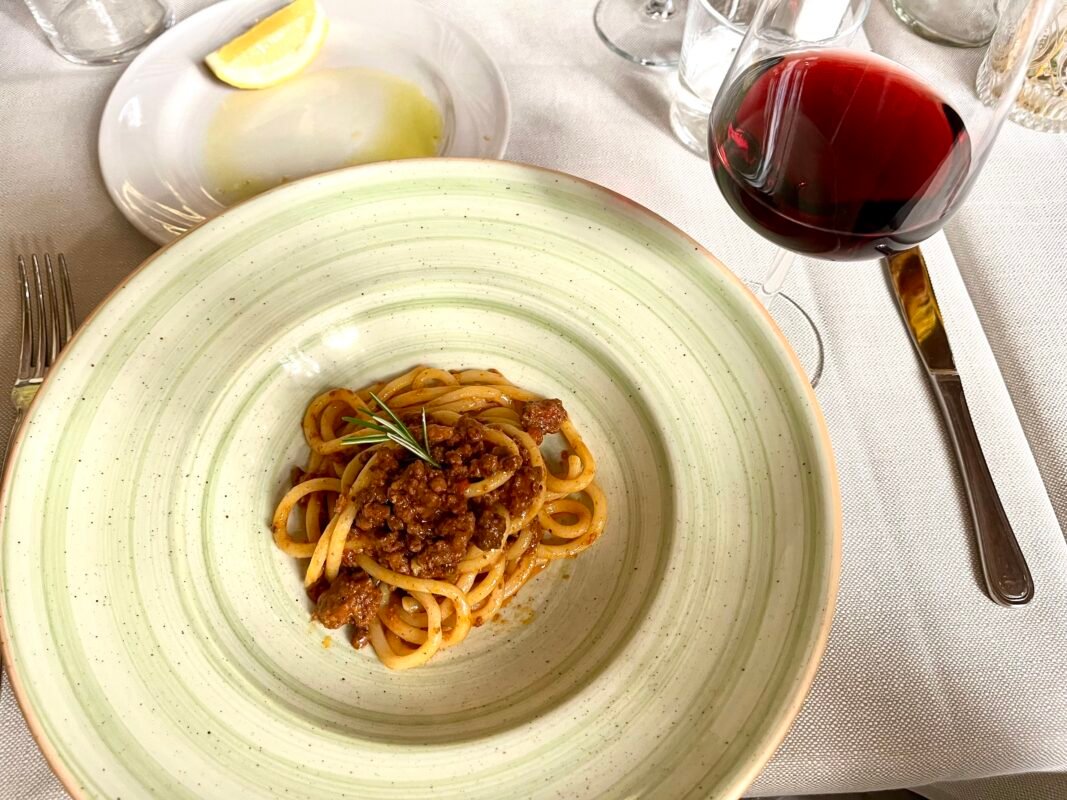
At Ristorante La Grotta Guelfa, I settled into the warm atmosphere and ordered pici al ragù Toscano.
Pici is wonderfully rustic—a thick, hand-rolled Tuscan pasta with a satisfying chew that catches every bit of sauce. Paired with Tuscan ragù, it becomes the kind of dish that makes you stop talking for a moment.
The sauce was rich and comforting, the pasta substantial and beautifully simple.
It was Florence on a plate.
And perhaps that is the secret of Tuscan cooking. It rarely tries to impress you with unnecessary decoration. Instead, it relies on quality ingredients, time and technique.
ESPRESSO, GELATO & THE ART OF PAUSING
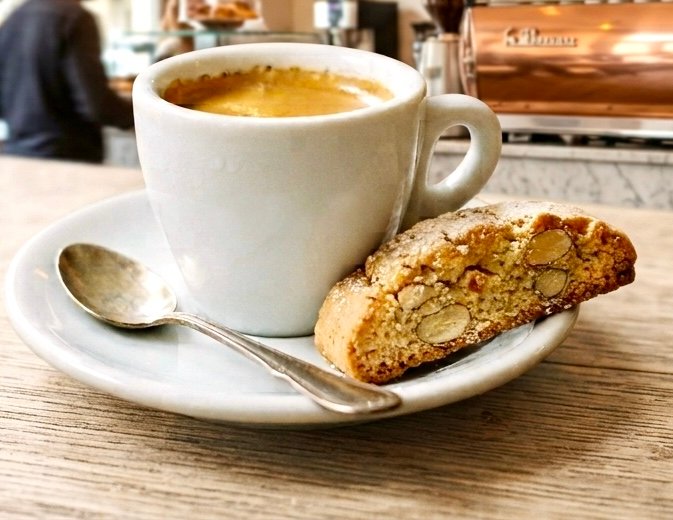
At Caffè Vergnano 1882, I indulged in one of Italy’s most enduring rituals: espresso.
There is something wonderfully elegant about the Italian coffee break. An espresso is small, intense, and completely unapologetic. It doesn’t need whipped cream, complicated syrups, or a name longer than the cup itself.
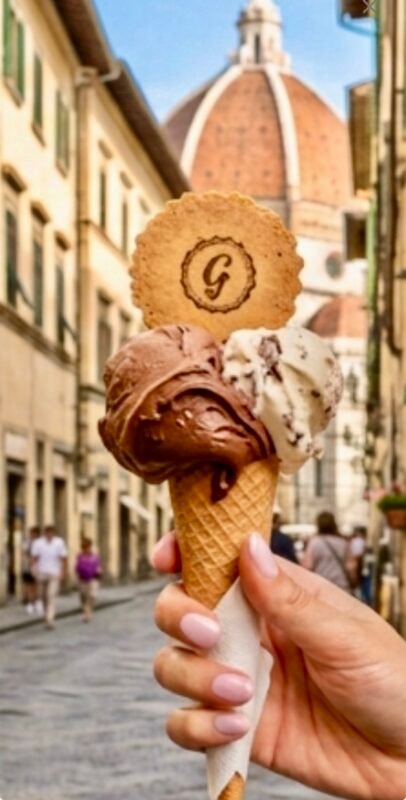
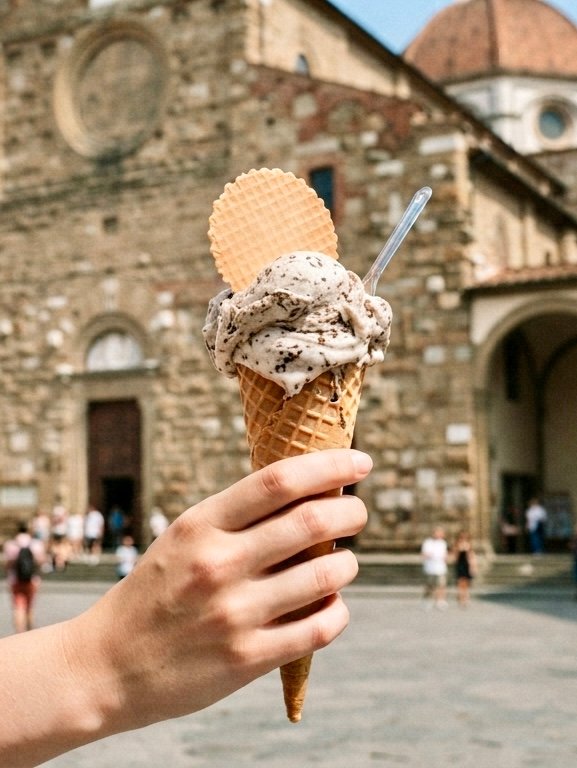
Then, because life should be properly balanced, I went to Venchi for gelato.
Venchi’s combination of chocolate and gelato is irresistible, and the shop feels like a confectioner’s fantasy. Rich chocolate, beautiful displays and creamy gelato make restraint nearly impossible.
Fortunately, I had already decided that calories consumed beneath Renaissance architecture don’t count.
I’m still waiting for scientific confirmation.
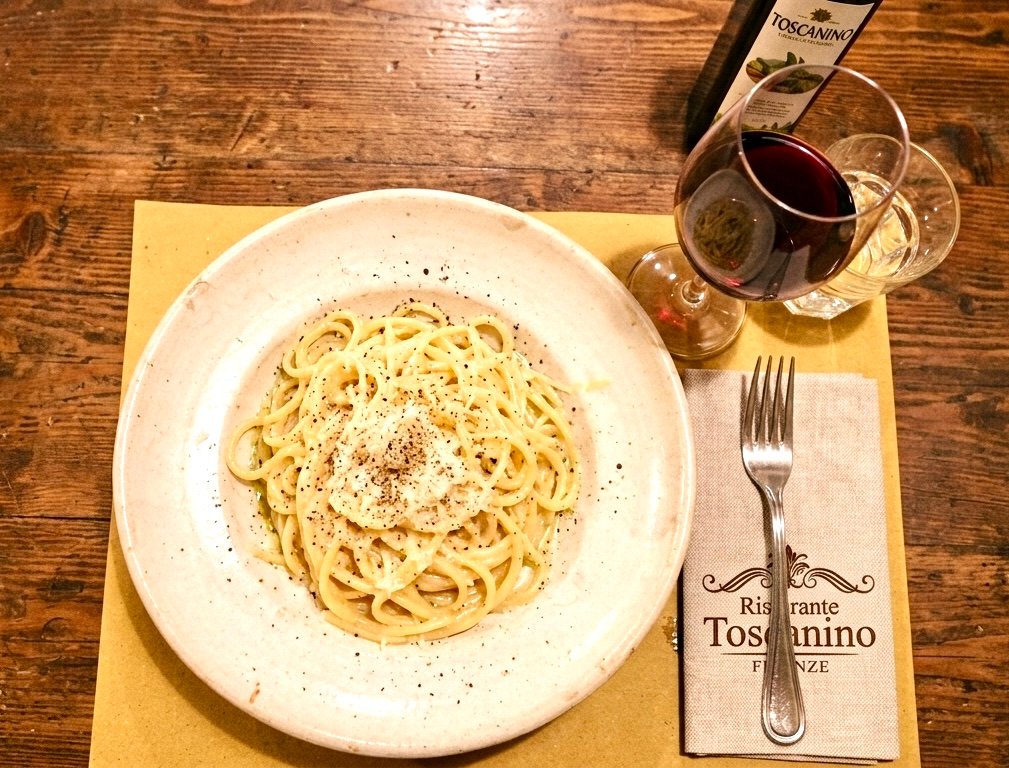
CACIO E PEPE WITH A FLORENTINE VIEW
At Toscanino Firenze, I ordered the famous cacio e pepe.
The ingredients are humble: pasta, pecorino and black pepper. Yet the result is silky, savory and deeply satisfying.
This is Italian cooking at its most confident. No unnecessary embellishment. No complicated sauce. Just technique.
And in Florence, even a plate of pasta seems to taste better when you can look up and see centuries-old architecture surrounding you.
THE LITTLE WINE WINDOW
One of my favorite discoveries was Florence’s historic Buchetta del vino, Matteoni, or wine windows, located at via della Scala, 10, Florence.
At Buchetta del Vino, I experienced the delightful tradition of ordering wine through a tiny opening in a building and savoring the delicious red grapes of Italy while strolling the ancient streets of Florence.
The concept is wonderfully Florentine. Wine merchants historically used these small windows to sell wine directly to customers. Today, the tradition has been revived, turning a piece of architectural history into one of the city’s most charming culinary experiences.
You knock. You order. A glass appears.
And suddenly your stroll through Florence has become an aperitivo.
I cannot think of a more civilized way to walk through a city.
IL BISONTE: LEATHER THAT TELLS A STORY
Florence’s architecture may be its most visible art form, but its craftsmanship can be carried home.
At Il Bisonte, I explored beautifully made leather handbags, wallets, belts, backpacks, briefcases and accessories.
The brand’s vegetable-tanned leather is designed to develop a distinctive patina with age and use.
And that is precisely what makes beautiful Italian leather so special.
It changes with you.
A handbag becomes softer.
The color deepens.
Small marks become memories.
The object acquires a history.
In a world increasingly filled with things designed to be replaced, there is something deeply satisfying about owning something designed to become more beautiful.
THE FLORENCE I TOOK HOME
At Towns of Italy Cooking School, I traded my role as traveler for that of student and joined a hands-on pizza and gelato class.
There was dough beneath my fingertips and the unmistakable excitement of making something from scratch.
Learning to make pizza in Italy feels almost ceremonial. You begin with simple ingredients, but technique transforms them. Dough becomes a crust; toppings become a meal; and suddenly the kitchen becomes a place of connection.
Then came gelato. Chocolate gelato, may I say.
Of course.
By the end of the class, I had not only learned new recipes but experienced another piece of the Italian philosophy of food: cooking should be hands-on, ingredients should be respected and eating should be pleasurable.
THE FLORENCE I WILL REMEMBER
By the end of my journey, I realized that I had experienced Florence through nearly every sense.
I had stood beneath Brunelleschi’s extraordinary dome and wandered beneath the marble façades of Renaissance churches.
I had walked through medieval piazzas and across the Ponte Vecchio.
I had admired the imposing Palazzo Vecchio and imagined the Medici moving through the Vasari Corridor above the city.
I had discovered a stone associated with Dante.
I had eaten pici al ragù Toscano and cacio e pepe.
I had stopped for espresso and gelato.
I had ordered wine through a tiny window in a centuries-old wall.
I had admired the craftsmanship of Il Bisonte and watched artisans at the Scuola del Cuoio continue traditions passed down through generations.
And I had made pizza and gelato with my own hands.
But what stays with me most are the small moments.
The sound of footsteps on ancient stone.
The warm color of the buildings at sunset.
A church façade glowing in the late afternoon.
The Arno beneath the Ponte Vecchio.
The silhouette of the Duomo appearing between rooftops.
A fork twirling through pasta.
A leather bag waiting patiently to become part of someone’s story. (It did become mine)
A tiny glass of wine passed through a wall.
That is Florence.
It is architecture you can walk through, history you can touch and food you can taste.
It is a city where Michelangelo and your lunch somehow occupy the same afternoon.
And perhaps that is why Florence feels less like a destination and more like an invitation—to slow down, look closely, eat beautifully and remember that the art of living well is not necessarily complicated.
Sometimes it is simply a beautiful city, a good meal and nowhere else you need to be.
YVETTE’S FLORENCE
If I could give you one piece of advice before you go, it would be simple:
Don’t rush Florence.
Let her reveal herself slowly.
Look up at the Duomo.
Stand beneath the arches of Santa Croce.
Wander through Piazza della Signoria.
Cross the Ponte Vecchio.
Pause before a Renaissance façade.
Run your fingers over a piece of Florentine leather.
Sit down for pasta.
Order the gelato.
Drink the espresso.
Find a wine window.
And when you discover one, knock.
Order a glass.
Perhaps two.
Then raise it to Florence—the city that transformed art, architecture and food into a way of life.
And take your time.
Because the greatest luxury Florence offers isn’t found in a shop, a museum or even a magnificent hotel.
It is the extraordinary privilege of simply being there.
Until the next delicious journey,
Yvette
Yvette’s Gourmet Kitchen
Where Food Meets Travel, and Every Bite Tells a Story.



Yvette