Beef Stew
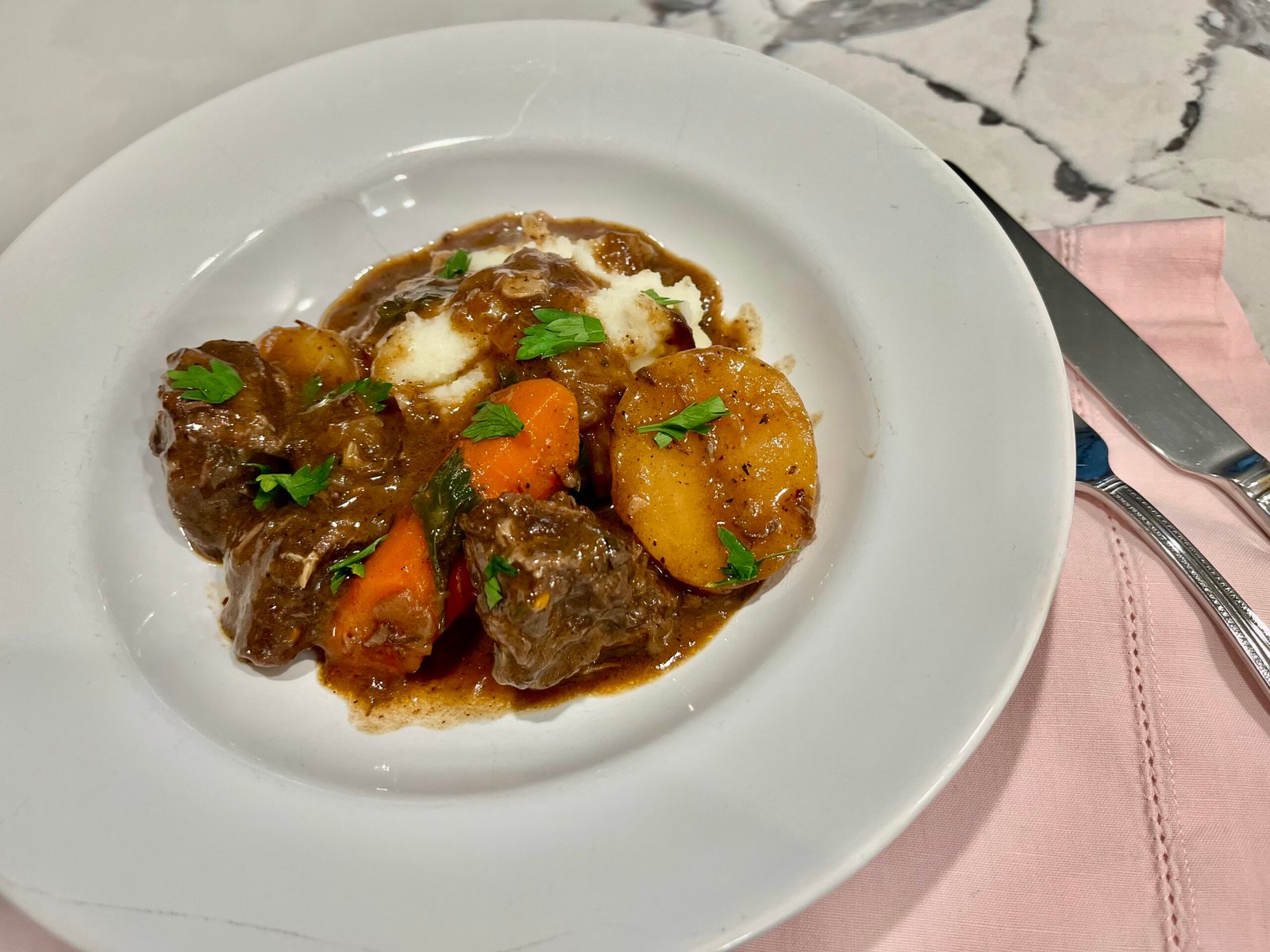
For a truly comforting meal, nothing rivals a slow-cooked beef stew featuring tender, marbled chuck roast seared to a deep mahogany crust. The secret lies in deglazing the pot to lift the savory fond, then simmering the beef in a rich bone broth infused with dry red wine, fresh thyme, and bay leaves. As the stew thickens naturally, the addition of vibrant heirloom carrots and buttery Yukon Gold potatoes creates a hearty, melt-in-your-mouth texture that defines rustic elegance. Serve over some silky, smooth, buttery mashed potatoes, and it's the start of a comforting meal. Beef Stew: A Love Story That Simmered Through History If comfort food had a résumé, beef stew would list “reliable,” “deeply satisfying,” and “has never let anyone down on a cold day.” It’s the dish you put on when you want your home to smell like, “Welcome, have a seat, and join us for a meal.” But beef stew isn’t just cozy—it’s ancient, practical, and quietly nutritious. Let’s grab a spoon and dig into where it came from, why it’s good for you, and a few fun facts that make it even more lovable. Once Upon a Pot: The Origins of Beef Stew Beef stew is less a single recipe and more a brilliant idea humanity keeps reinventing: take tough meat, add liquid, cook it slowly until magic happens. Stews date back thousands of years, likely appearing soon after humans invented sturdy pottery that could sit near a fire. Early versions were survival food—ways to stretch meat, soften tough cuts, and make use of whatever vegetables were around. Think ancient Mesopotamia, medieval Europe, and pretty much any place where people said, “We’ve got time and a pot—let’s make this better.” As cattle became domesticated and more widely available, beef found its way into stews across cultures: France gave us boeuf bourguignon, simmered lovingly in red wine. Ireland leaned into hearty beef, potatoes, and onions. Hungary spiced things up with paprika in goulash. Japan turned beef stew into nikujaga, subtly sweet and soy-based. Different flavors, same philosophy: low heat, long time, maximum reward. The Slow-Cooked Secret: Why Beef Stew Is Good for You Beef stew doesn’t shout about its health benefits, but it’s quietly impressive. 🥩 Protein Power Beef is rich in high-quality protein, which supports muscle repair, immune function, and keeps you feeling full. Tougher cuts often used in stew—like chuck or brisket—are especially rich in connective tissue that breaks down into gelatin during cooking. 🧠 Iron & B Vitamins Beef provides heme iron, which your body absorbs more easily than plant-based iron. It also delivers B vitamins (especially B12), supporting energy levels and brain health. Translation: beef stew is comfort food that actually helps you function. 🥕 Veggies That Mean Business Classic stew vegetables—carrots, onions, celery, potatoes—bring fiber, vitamins, and minerals to the party. Slow cooking helps soften fibers and makes nutrients more accessible, while still keeping the dish hearty and balanced. 🫗 Bonus: Collagen That silky, rich broth? Thank collagen. As it melts into gelatin, it contributes to joint health and gut-friendly goodness—and gives stew that lip-smacking, “just one more bite” texture. Fun Facts to Stir Into Conversation Stew was the original meal prep. Make a big pot, feed many people, and eat leftovers for days. Medieval efficiency at its finest. It tastes better tomorrow—for real. As stew rests, flavors mingle and deepen. Science backs this up: slow diffusion and fat-soluble flavor compounds need time to bloom. Every culture has a “beef stew cousin.” If you travel and miss home, order the local stew. It’s the universal language of comfort. Tough cuts = better stew. Fancy steaks are actually worse here. Marbled, hardworking muscles shine when given time. Stew is basically edible patience. You can’t rush it—and that’s kind of the point. Why We Keep Coming Back to It Beef stew has survived wars, winters, and questionable kitchen trends (looking at you, aspic). It endures because it’s adaptable, forgiving, and deeply human. You don’t need precision—just time, heat, and the willingness to let things unfold slowly. In a world obsessed with speed, beef stew asks you to wait. And then it rewards you with warmth, nourishment, and the smug satisfaction of knowing dinner’s going to be great for days. So the next time a pot of beef stew is quietly bubbling away on your stove, remember: you’re participating in one of humanity’s longest-running, best-tasting traditions. Enjoy!🥄🥩 Beef Stew Servings: Serves 6 Prep time: 30 minutes Cook time: 3hours 30 minutes Ingredients: 3 pounds boneless, beef chuck, cut into 1 1/2 inch pieces 2 teaspoons salt 1 teaspoon freshly ground pepper 3 tablespoons olive oil 2 medium onions, cut into 1 inch chunks 8 garlic cloves, peeled and smashed 2 tablespoons balsamic vinegar 1 1/2 tablespoons tomato paste 1/4 cup all purpose flour 2 cups dry red wine 2 cups low sodium beef broth 2 cups water 1 bay leaf 1/2 teaspoon dried thyme 1 1/2 teaspoons sugar 4 large carrots, peeled and cut into 1 1/2 inch pieces on a diagonal 1 pound small Yukon Gold potatoes (skin on), cut in half Fresh parsley, roughly chopped, for serving (optional) Serve over Mashed potatoes (optional, but delicious) Preparation: Preheat the oven to 325°F (165°C) and set a rack in the lower middle position. Place the beef on a baking sheet and pat it dry with paper towels. Season with salt and pepper. In a large Dutch oven or heavy soup pot, heat 1 tablespoon of the olive oil over medium-high heat until hot and shimmering. Brown the meat in 3 batches, turning with tongs, for about 5-8 minutes per batch; add one tablespoon more oil for each batch. (To sear the meat properly, do not crowd the pan) (otherwise they will steam and not create a nice sear) and let the meat develop a nice brown crust before turning with tongs.) Transfer the meat to a large plate and set aside. Turn off the heat after your last batch since the remaining oil will be very hot and spitting out a bit. Add the onions, garlic, and balsamic vinegar; turn the heat back to a medium heat and cook, stirring with a wooden spoon and scraping the brown bits from the bottom of the pan, for about 5 minutes. Add the tomato paste, stir, and cook for a minute more. Add the beef with its juices back to the pan and sprinkle with the flour. Stir with a wooden spoon until the flour is dissolved, 1 to 2 minutes. Add the wine, beef broth, water, bay leaf, thyme, and sugar. Stir with a wooden spoon to loosen any browned bits from the bottom of the pan, then bring to a boil. Turn off the heat. Cover the pot with a lid, transfer to the preheated oven, and braise for 2 hours. Remove the pot from the oven and add the carrots and potatoes. Cover and return to the oven for about an hour more, or until the vegetables are cooked, the broth is thickened, and the meat is tender. Fish out the bay leaf and discard, then taste and adjust seasoning if necessary. Serve over mashed potatoes-- or let it come to room temperature and then store in the refrigerator overnight or until ready to serve. This stew improves in flavor if made at least 1 day ahead. Reheat, covered, over medium heat. Garnish with fresh parsley, if desired.
Prep Time 30 minutes mins
Cook Time 3 minutes mins
Total Time 4 minutes mins
Course Main Dish
Cuisine Comfort Food
Dutch oven
Baking Sheet
Wooden Spoon
Tongs
Lid
- 3 pounds boneless beef chuck cut into 1 1/2 inch pieces
- 2 teaspoons salt
- 1 teaspoon freshly ground pepper
- 3 tablespoons olive oil
- 2 medium onions cut into 1 inch chunks
- 8 cloves garlic peeled and smashed
- 2 tablespoons balsamic vinegar
- 1 1/2 tablespoons tomato paste
- 1/4 cup all purpose flour
- 2 cups dry red wine
- 2 cups low sodium beef broth
- 2 cups water
- 1 leaf bay
- 1/2 teaspoon dried thyme
- 1 1/2 teaspoons sugar
- 4 large carrots peeled and cut into 1 1/2 inch pieces on a diagonal
- 1 pound small Yukon Gold potatoes skin on, cut in half
Preheat the oven to 325°F (165°C) and set a rack in the lower middle position.
Place the beef on a baking sheet and pat it dry with paper towels. Season with salt and pepper. In a large Dutch oven or heavy soup pot, heat 1 tablespoon of the olive oil over medium-high heat until hot and shimmering. Brown the meat in 3 batches, turning with tongs, for about 5-8 minutes per batch; add one tablespoon more oil for each batch. (To sear the meat properly, do not crowd the pan) (otherwise they will steam and not create a nice sear) and let the meat develop a nice brown crust before turning with tongs.) Transfer the meat to a large plate and set aside. Turn off the heat after your last batch since the remaining oil will be very hot and spitting out a bit.
Add the onions, garlic and balsamic vinegar; turn the heat back to a medium heat and cook, stirring with a wooden spoon and scraping the brown bits from bottom of the pan, for about 5 minutes. Add the tomato paste, stir, and cook for a minute more. Add the beef with its juices back to the pan and sprinkle with the flour. Stir with a wooden spoon until the flour is dissolved, 1 to 2 minutes. Add the wine, beef broth, water, bay leaf, thyme, and sugar. Stir with a wooden spoon to loosen any browned bits from the bottom of the pan, then bring to a boil. Turn off the heat. Cover the pot with a lid, transfer to the preheated oven, and braise for 2 hours.
Remove the pot from the oven and add the carrots and potatoes. Cover and return to the oven for about an hour more, or until the vegetables are cooked, the broth is thickened, and the meat is tender. Fish out the bay leaf and discard, then taste and adjust seasoning, if necessary. Serve over mashed potatoes-- or let it come to room temperature and then store in the refrigerator overnight or until ready to serve. This stew improves in flavor if made at least 1 day ahead. Reheat, covered, over medium heat. Garnish with fresh parsley, if desired.