

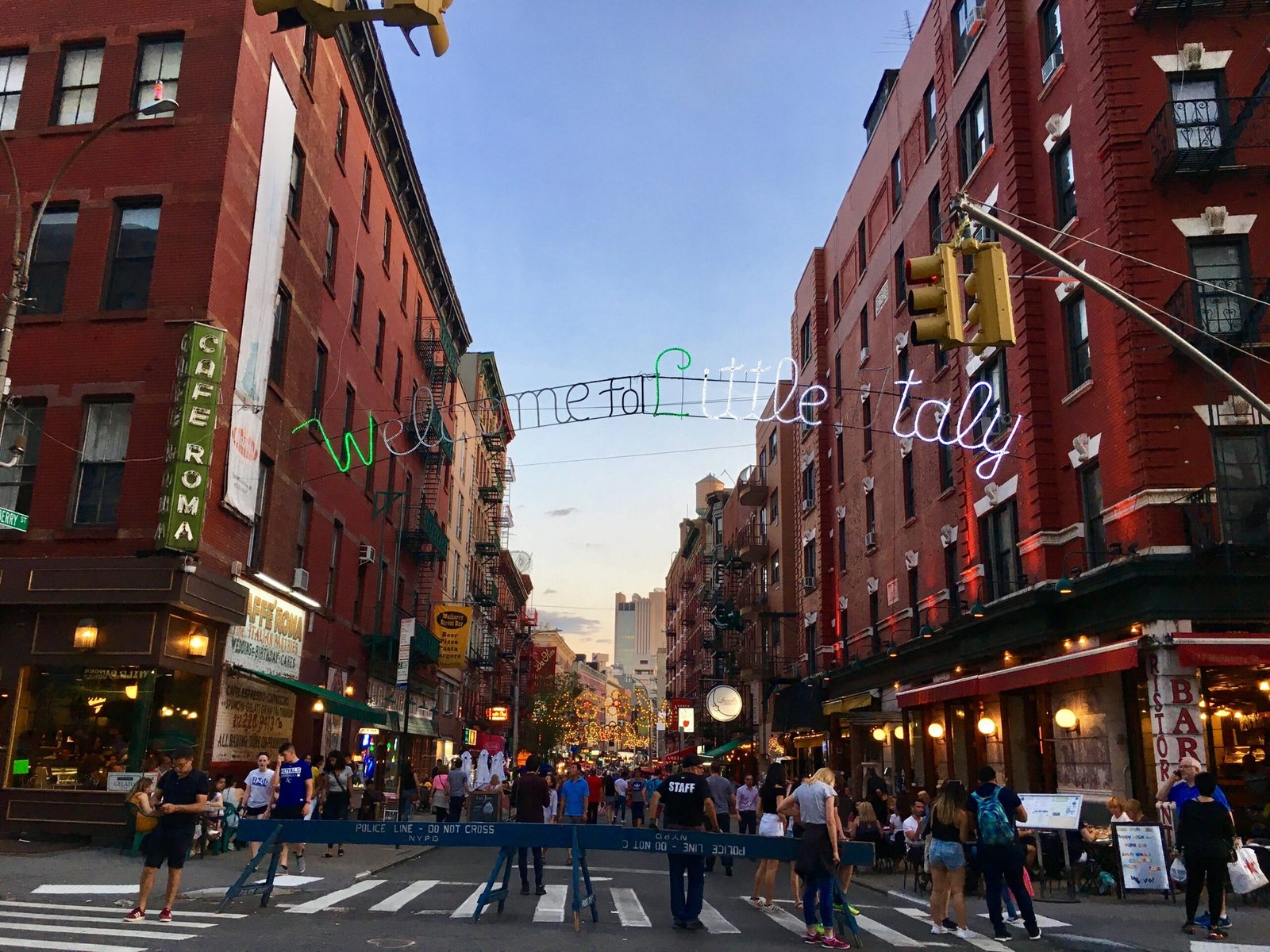
Little Italy, Manhattan, New York City

Tucked into the heart of many North American cities, Little Italy neighborhoods have long been a vibrant reminder of the Italian immigrant experience and its enduring impact on urban culture. These districts, often marked by bustling restaurants, festive markets, and colorful street scenes, are more than just tourist destinations—they are living testaments to tradition, resilience, and culinary artistry. Central to this heritage is the beloved biscotti, a twice-baked cookie with a story as rich as the neighborhoods that popularized it.

In the late 19th and early 20th centuries, waves of Italian immigrants arrived in cities like New York, San Francisco, and Toronto, seeking new opportunities while carrying old-world customs. They clustered in specific neighborhoods, creating enclaves where Italian was spoken on the street corners, Catholic churches served as community centers, and the aroma of fresh bread and simmering tomato sauce filled the air. These Little Italys became sanctuaries, providing comfort in a foreign land and preserving cherished cultural practices.

Over time, Little Italys evolved into vibrant cultural hubs. They are known for annual festivals celebrating Italian saints, lively outdoor café scenes, and specialty food shops selling everything from imported olive oils to handmade pastas. For many, a stroll down Mulberry Street is a sensory journey—one that bridges the gap between past and present.

Amid the myriad pastries and confections found in Little Italy bakeries, biscotti hold a special place. The word “biscotti” comes from the Latin “bis coctus,” meaning “twice baked.” This technique, which originated in ancient Rome, was practical: baking the dough twice removed moisture, resulting in a dry, sturdy treat that could be stored for long periods—perfect for Roman soldiers and travelers.

Over centuries, biscotti evolved. In the Tuscan city of Prato, bakers refined the recipe, adding almonds and shaping the dough into long loaves before slicing and rebaking. Traditionally, these cookies were served with vin santo, a sweet dessert wine, into which they were dunked to soften their crunch.

Italian immigrants brought biscotti recipes with them to North America. In Little Italys, these cookies became bakery staples, enjoyed with coffee or espresso and shared during holidays and family gatherings. Modern variations abound—featuring hazelnuts, chocolate, citrus zest, and more—demonstrating the biscotti’s adaptability and enduring appeal.

Today, the biscotti is more than a cookie; it’s a symbol of heritage and hospitality. Its presence in Little Italy bakeries and cafés speaks to the ways immigrants preserved and adapted their culinary traditions, offering a taste of home to new generations. Whether enjoyed alongside a steaming cappuccino or wrapped as a gift, biscotti connect the past with the present, one delicious bite at a time.

In wandering the streets of Little Italy, the story of biscotti reminds us that food is more than sustenance—it’s memory, identity, and community, baked twice for good measure.

About Me

Hello, I'm Yvette

Well, hello there! Thank you for taking a look. I hope you stay awhile and revisit often. I’m Yvette, and the recipes you will find here are easy to follow from my home and world travels all with pics included. They are prepared with whole food, seasonal ingredients that nourish your body and will make your culinary experience smooth. Most are very easy and quick while some are nurtured with longer preparation time for a Sunday or holiday event.

My Social Links

Follow Me

Let's Eat

Recipe


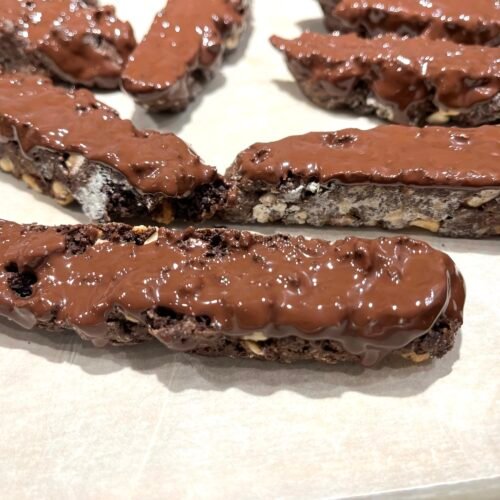
Chocolate Dipped Chocolate_Hazelnut Biscotti

Indulge in the perfect union of rich cocoa and toasted hazelnuts, a sophisticated treat where every crisp bite delivers a symphony of decadent flavor. These twice-baked Italian cookies are then generously dipped in velvety chocolate, creating an irresistible, elegant finale to any moment.
Prep Time 25 minutes
Cook Time 1 hour 40 minutes
Course Dessert
Servings 15

Ingredients
  

  • 4 ounces semisweet chocolate, coarsely chopped
  • 1 cup light brown sugar, firmly packed
  • 1 3/4 cups unbleached all-purpose flour
  • 1/3 cup unsweetened cocoa, Dutch process
  • 1 1/2 tablespoons instant espresso powder
  • 1 teaspoon baking soda
  • 1/4 teaspoon salt
  • 3 large eggs
  • 1 1/4 teaspoon vanilla extract
  • 1/2 teaspoon almond extract

For the chocolate icing

  • 8 ounces bittersweet chocolate, chopped
  • 2 teaspoons coconut oil

Instructions
 

  • Preheat an oven to 300ºF. Line a large baking sheet with parchment paper. In a food processor fitted with the metal blade, combine the chocolate and brown sugar and process until the chocolate is very fine; set aside. Alternatively, use a blender, processing 1 oz. chocolate and 1/4 cup sugar at a time.
    Sift together the flour, cocoa, espresso powder, baking soda and salt into a bowl; set aside.
    In the bowl of a stand mixer, combine the eggs, vanilla extract and almond extract. Mix on medium speed, beat to blend. Reduce the speed to low and mix in the sugar and flour mixtures until a stiff dough forms, adding the hazelnuts when the dough is about half mixed.
    On a floured surface, divide the dough into 2 equal portions. Form each portion into a log 12 inches long. Transfer the logs to the prepared baking sheet, spacing them well apart, and pat to even the shapes. Bake until almost firm to the touch, about 50 minutes (logs will spread during baking). Remove from the oven and let cool for 10 minutes.
    Leave the oven set at 300ºF. Using a spatula, carefully transfer the logs to a work surface. Using a serrated knife, cut logs diagonally into slices 1/2 to 3/4 inch thick. Arrange the slices, cut side down, back onto the baking sheet. Bake for 25 minutes. Turn the slices over and bake until crisp and dry, about 25 minutes more. Turn off the oven and let the biscotti cool completely in the oven with the door slightly ajar.
    Meanwhile, make the chocolate coating: Melt the chocolate and shortening in a heatproof bowl set over, but not touching, simmering water in a saucepan. Dip one side of the cooled cookies in the hot chocolate coating and set, chocolate side up, on a baking sheet. Refrigerate until set. Store in an airtight container in the refrigerator for up to 2 weeks.
Tried this recipe?Let us know how it was!

Travel With Yvette

Related Posts